

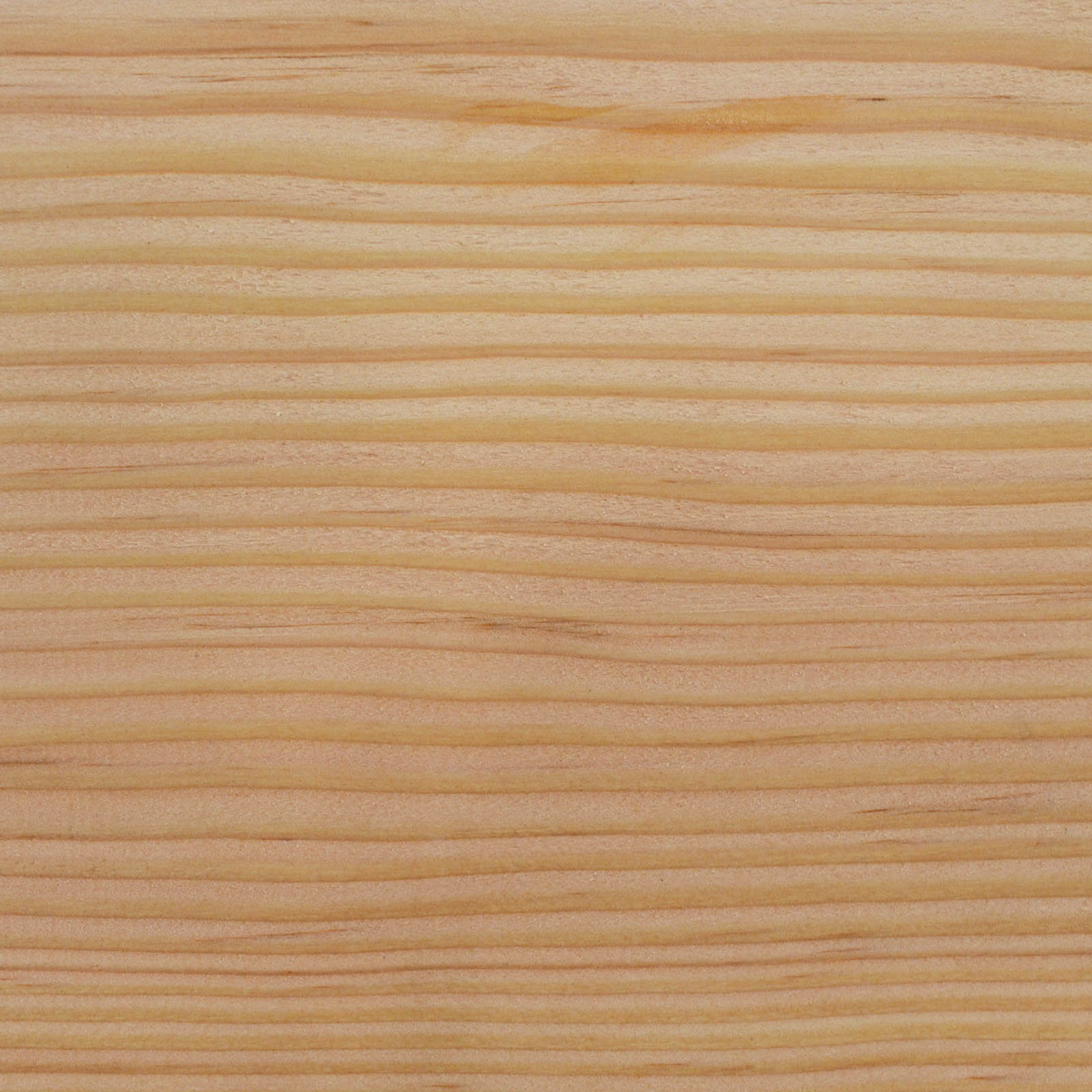
Considerations:
- Strong and stiff — excellent for long spans
- Readily available in large dimensions
- Good dimensional stability
- Moderately rot-resistant
- FSC-certified sources available
- Beautiful reddish-brown color
- Sourced out of the pacific northwest
- Moderately expensive
- May require treatment in humid climates
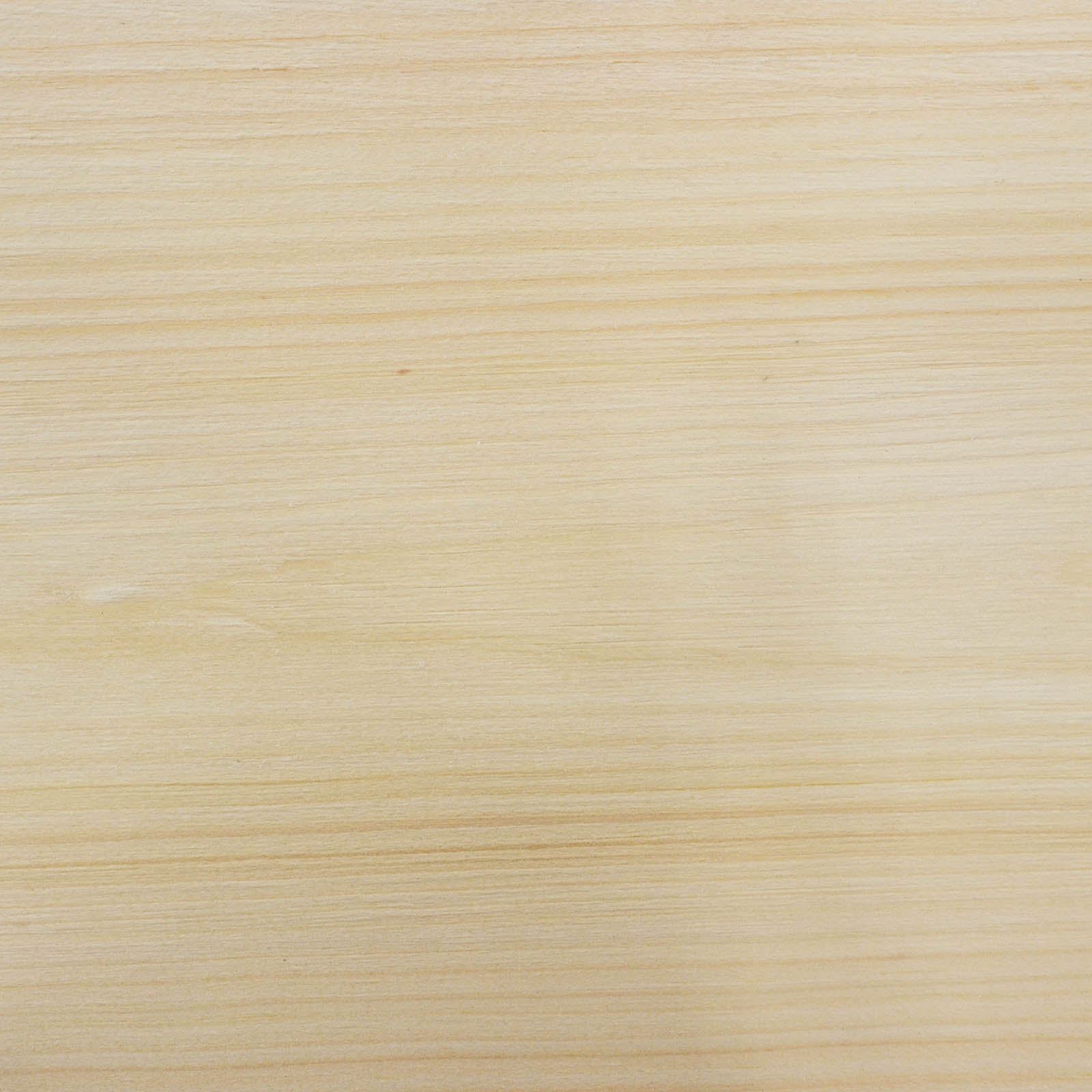
Eastern White Pine (Pinus strobus)
Considerations:
- Economical, sustainably managed, and readily available in the Northeast
- Lightweight and easy to work with
- Regionally sourced = shorter transport = lower carbon footprint
- Beautiful blonde color that turns more yellow with age
- Needs regular maintenance if exposed to the elements
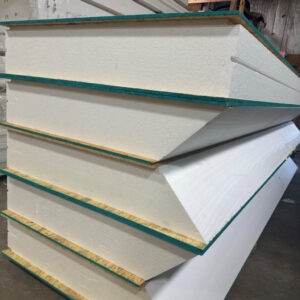
Expanded Polystyrene (EPS) Insulation
Considerations:
- EPS provides the highest R-value per inch for the money and is generally considered the most cost-effective core option for SIPs while still delivering strong thermal performance
- In a SIP assembly, the insulation layer is continuous across the wall/roof area which drastically reduces thermal bridging typical of stud wall construction
- EPS, a closed cell foam, when detailed and sealed correctly, achieves very low air leakage
- EPS keeps the same R-value over time unlike XPS and Polyiso
- EPS R-value increases as temperatures decreases and avoids the “cold-weather dip” associated with certain other foam chemistries
- EPS itself is not “ruined” by incidental wetting, but SIP assemblies can be vulnerable at joints, splines, bottom plates, window/door openings, and roof penetrations if not detailed correctly
- EPS is combustible and must be protected by code-compliant thermal barriers and proper detailing
- EPS does not contain chlorofluorocarbons (CFCs), hydrochlorofluorocarbons (HCFCs), nor volatile organic compounds (VOCs) unlike XPS and Polyiso
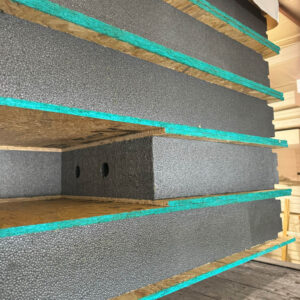
Graphite Polystyrene (GPS) Insulation
Considerations:
- GPS (graphite-enhanced polystyrene) provides increased R-value per inch versus EPS (approx. 18%-20% more)
- GPS is a bit more expensive than EPS
- In a SIP assembly, the insulation layer is continuous across the wall/roof area which drastically reduces thermal bridging typical of stud wall construction
- GPS R-value increases as temperatures decreases and avoids the “cold-weather dip” associated with certain other foam chemistries
- GPS, a closed cell foam, when detailed and sealed correctly, achieves very low air leakage
- GPS keeps the same R-value over time unlike XPS and Polyiso
- GPS contains more embodied carbon - good for the environment and better thermal performance
- GPS does not contain chlorofluorocarbons (CFCs), hydrochlorofluorocarbons (HCFCs), nor volatile organic compounds (VOCs) unlike XPS and Polyiso