
Typically, the timber frame structure and SIP panels account for roughly one quarter (¼) to one third (⅓) of the total build cost.
Many of our clients in the Northeast find that their total construction project costs start at between $350-500 per square foot, excluding land and site development. The timber frame and SIPs, with installation, often constitute roughly $100-150 per square foot of that cost depending on the design parameters.
Clients in other regions of the US and Canada may find their regional building costs vary substantially.
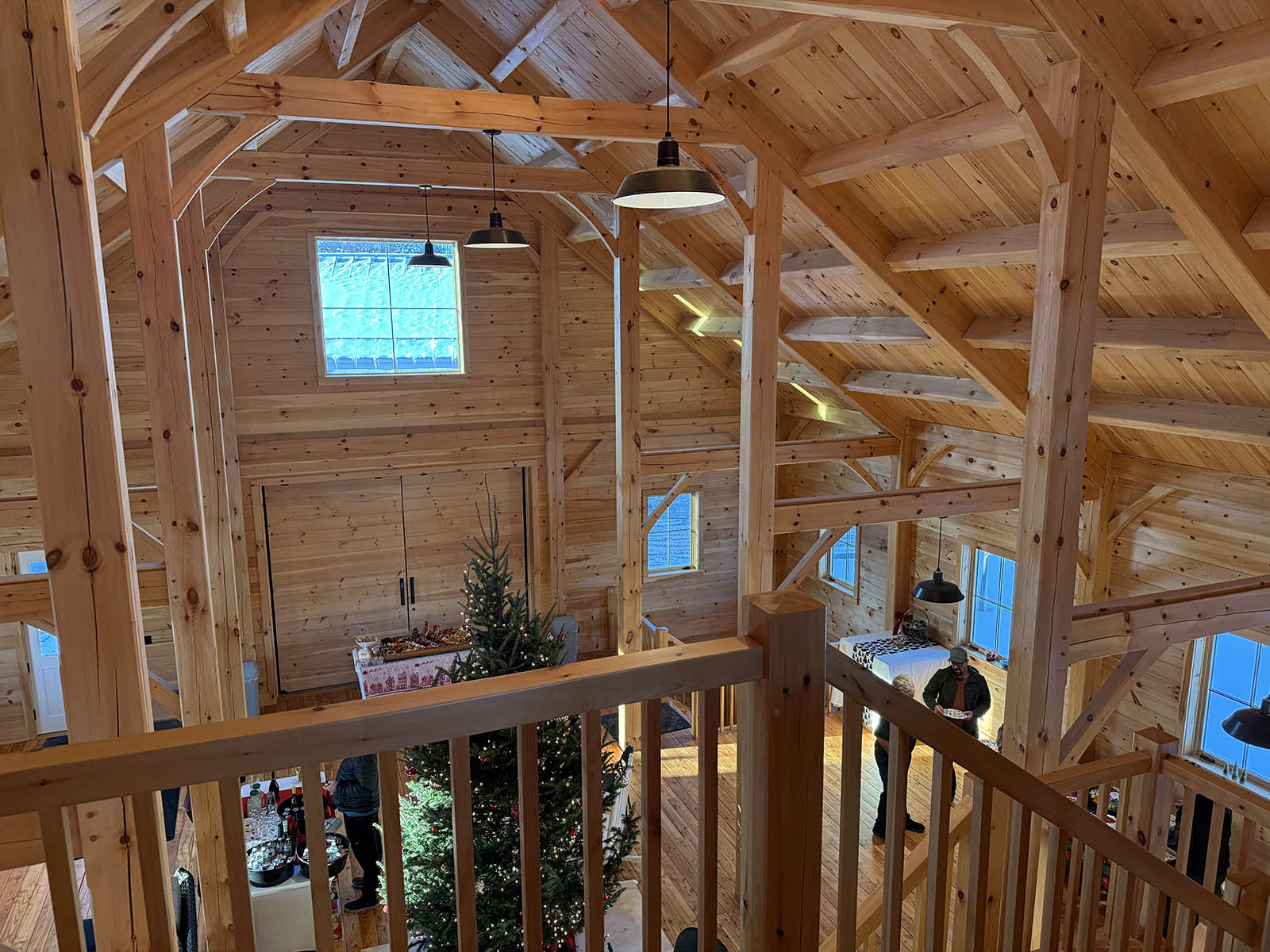
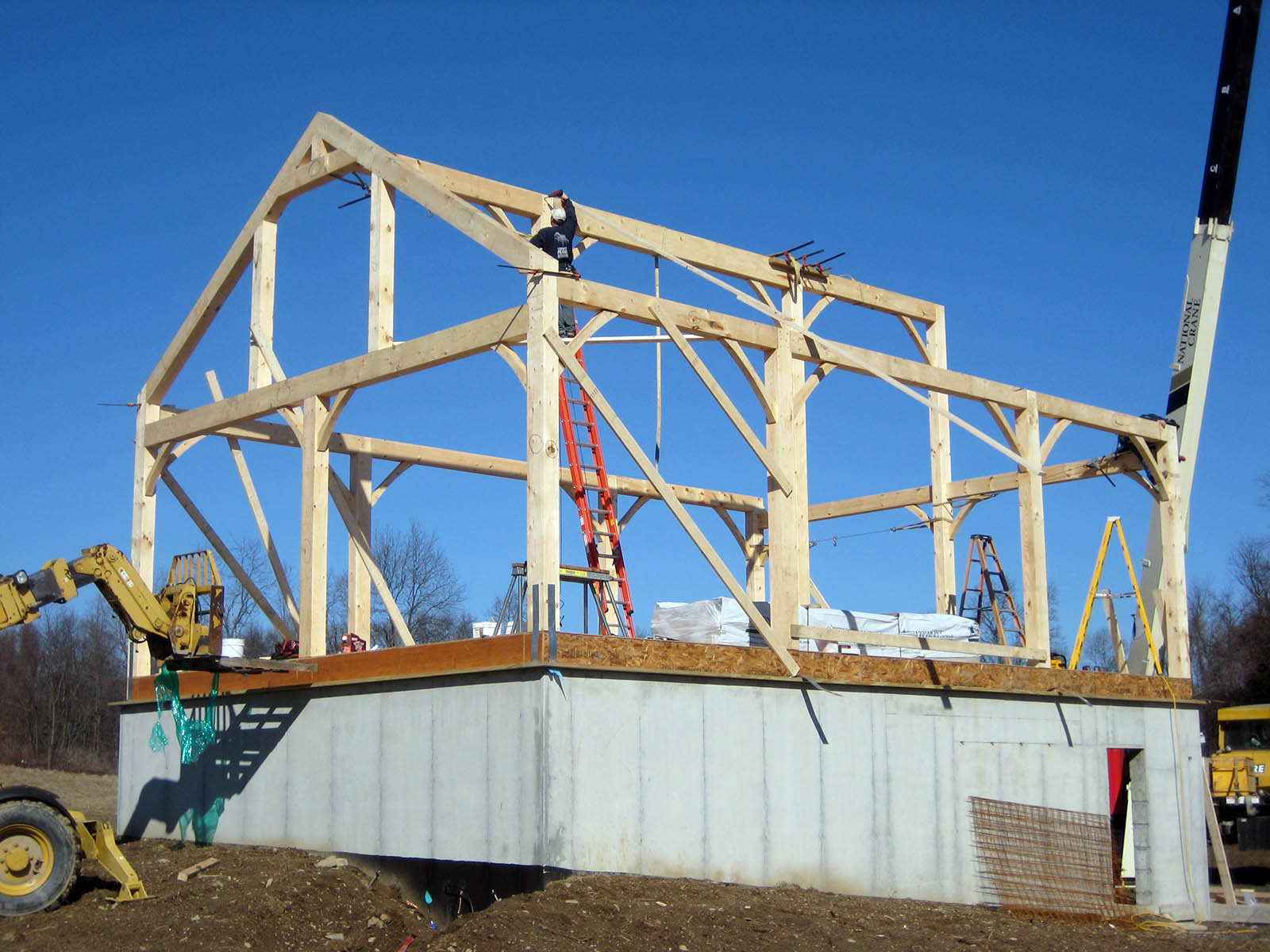
Building a timber frame home is a significant investment and a realistic budget is key to a smooth project. We'll work closely with you to define a fixed price contract that fits your vision.
We know you'll want options and to understand the cost levers within your control and we'll support you as you develop the budget. When vision, design and budget don't quite align, we'll help you problem solve. We want you to get the most out of your timber frame and SIPs.
If you have to compromise, start with the areas that are easiest and least expensive to upgrade.
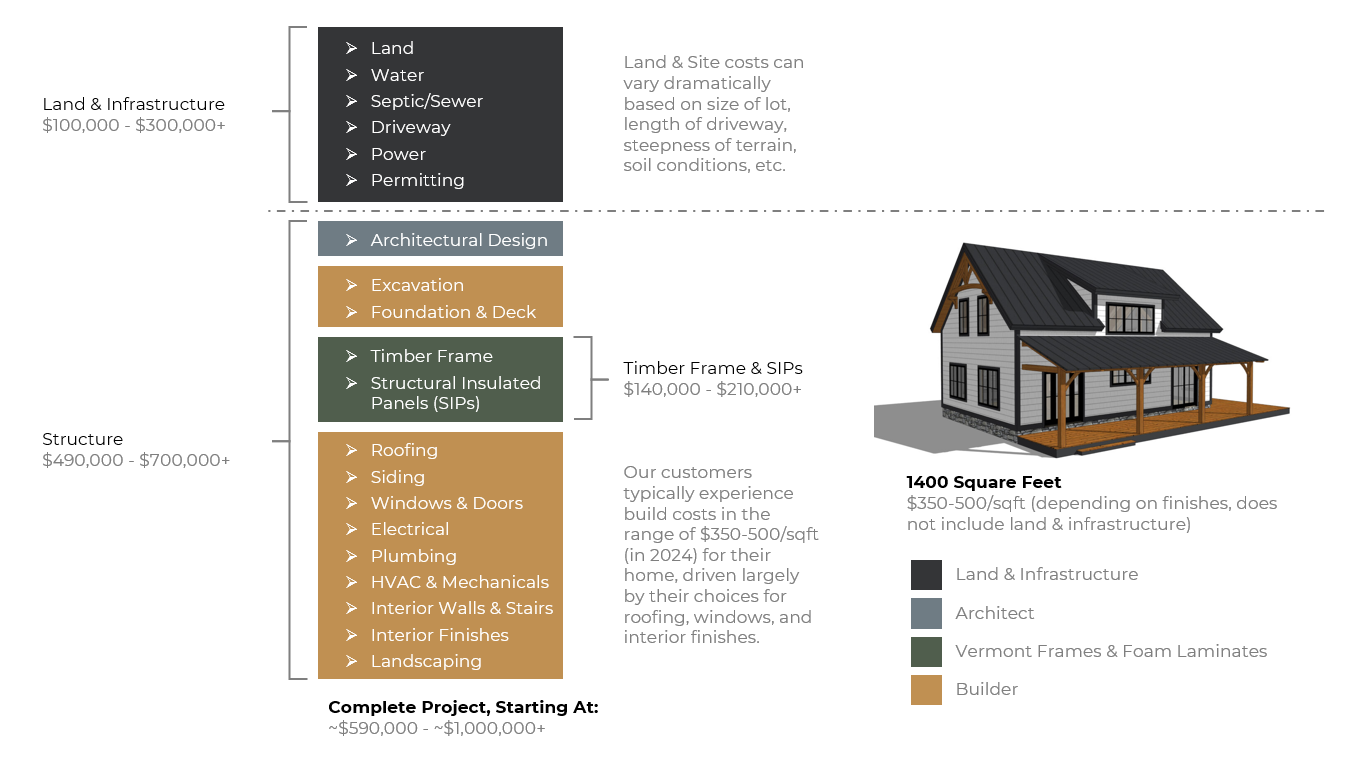
Project costs are directly affected by the scope of the project. This is one of the cost levers somewhat in your control.
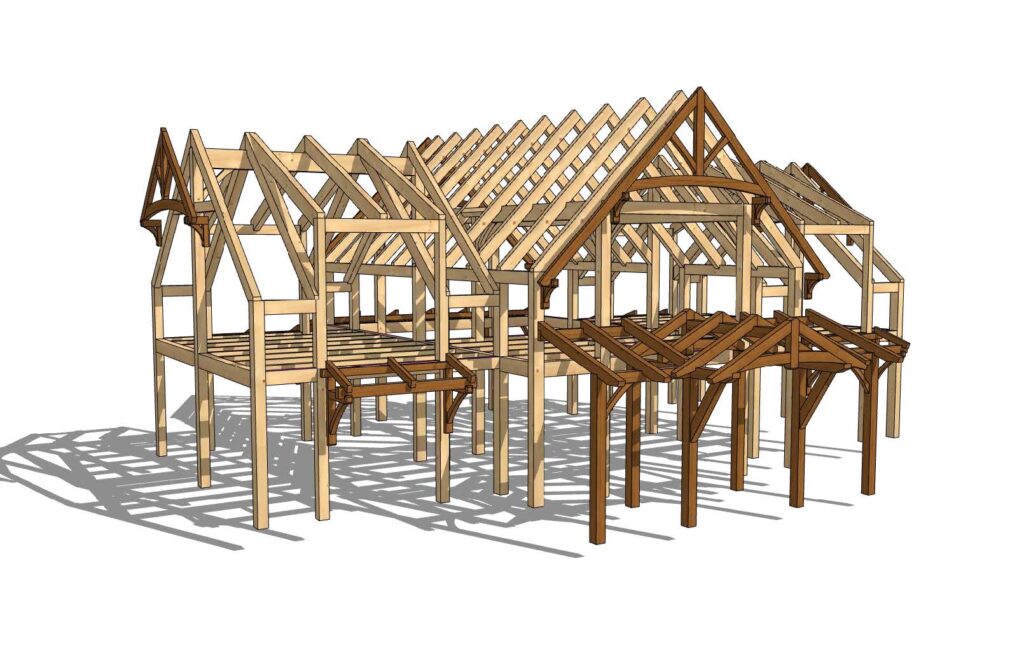
The overall scale of the project, including its size and design, will directly impact your costs. As a general rule, it's cheaper to go vertical instead of horizontal for timber frame costs.
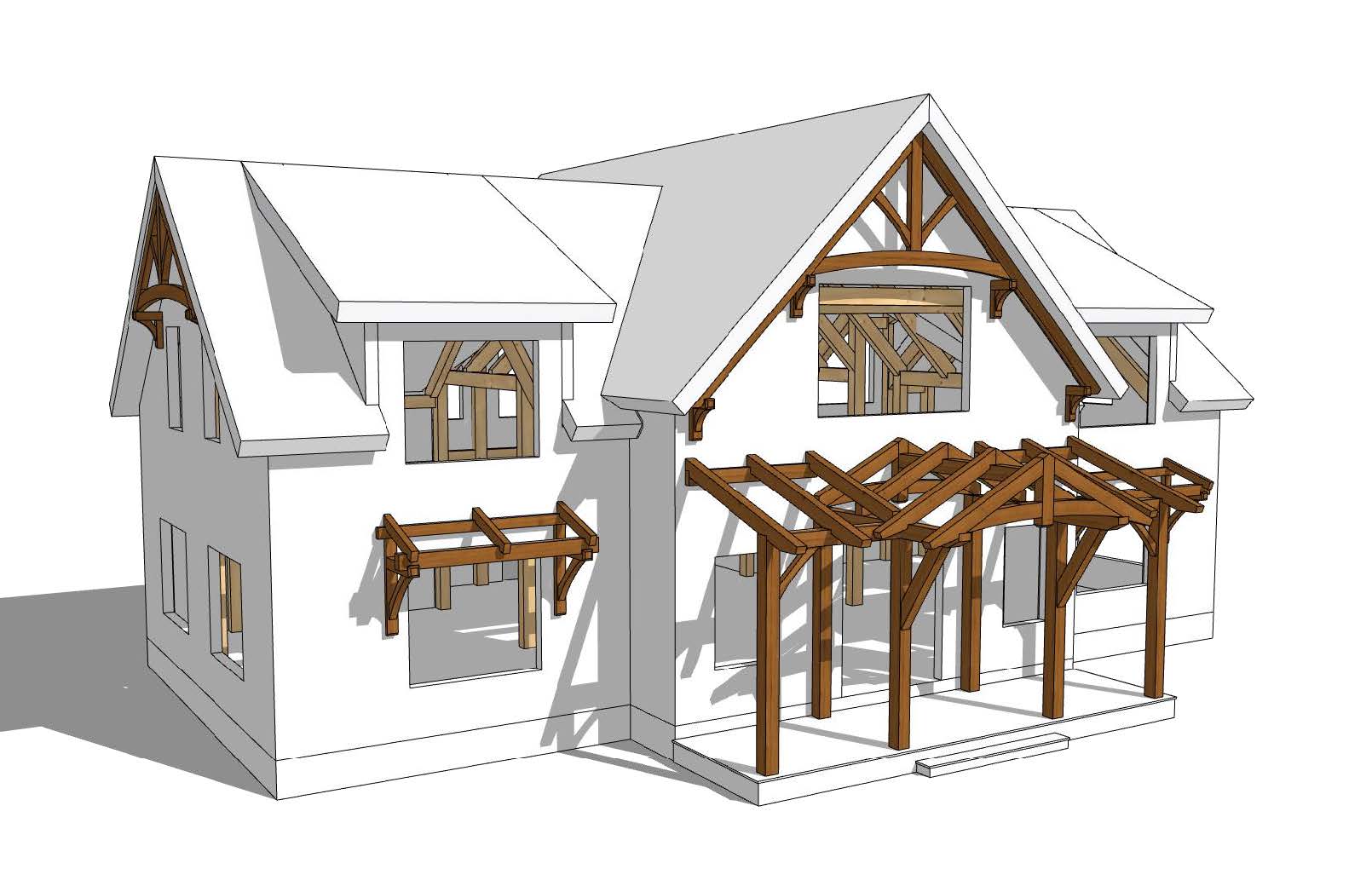
A single rectangle is the simplest design. Adding a wing adds another rectangle to the overall footprint for the design and that requires additional posts. Going vertical, the posts are already there - we're just extending them.
If your dream of having a timber frame throughout your home is proving to be a financial challenge, consider going with a hybrid solution.
- Frame Design and Engineering
- Pre-cut and Labeled Timbers
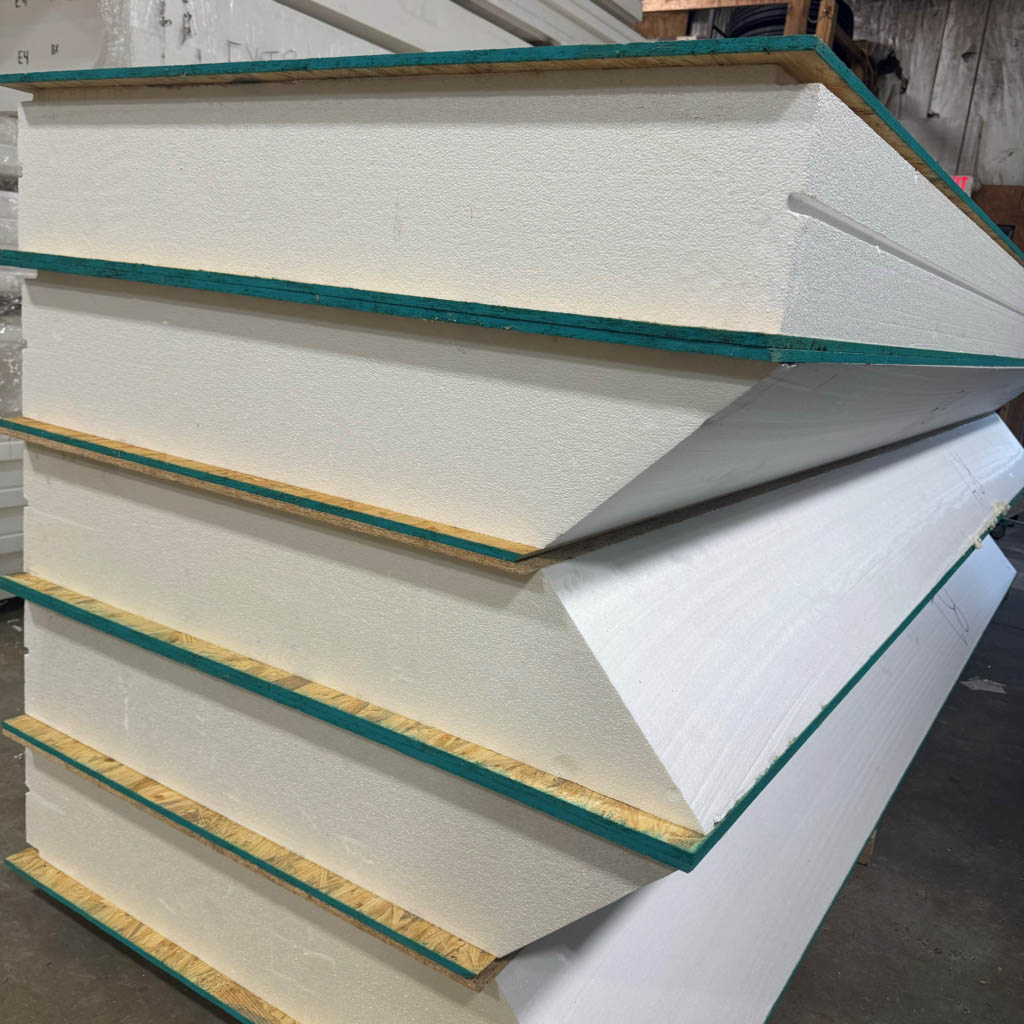
- Timber Frame and SIP Fasteners and Associated Hardware
- Timber Frame & Installation
- On-site Guidance (for Kits)
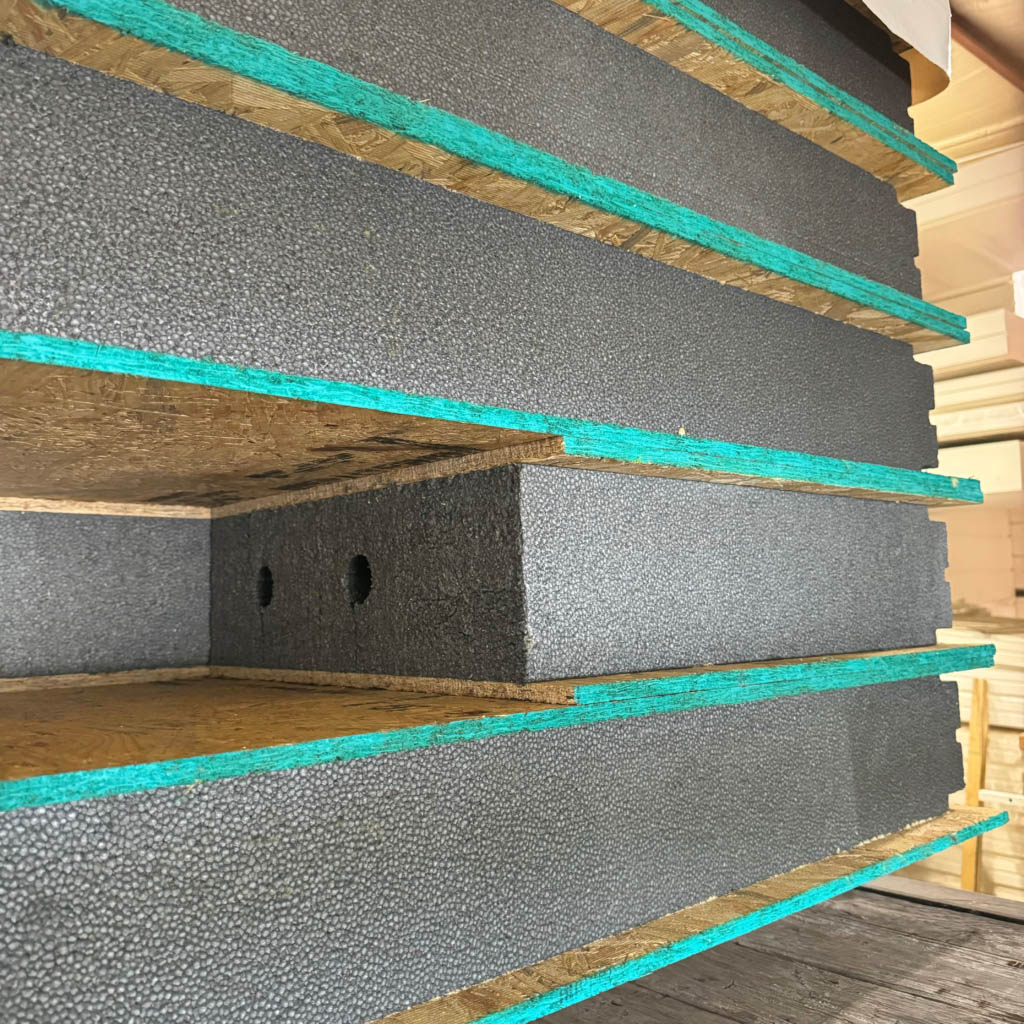
- SIPs & Installation
- Exterior Timber Elements
- Land, Foundation and Site Preparation
- Driveway, Water, Septic/Sewer, Power
- Excavation
- Foundation
- Structural First Floor Framing/Sheathing
- Windows and Doors
- Plumbing, Electrical, and HVAC Systems
- Siding & Roofing
- Interior Wall and Stair Framing
- Interior Finishes
- Landscaping
- Installation of Exterior Timber Elements
Some Recent Projects
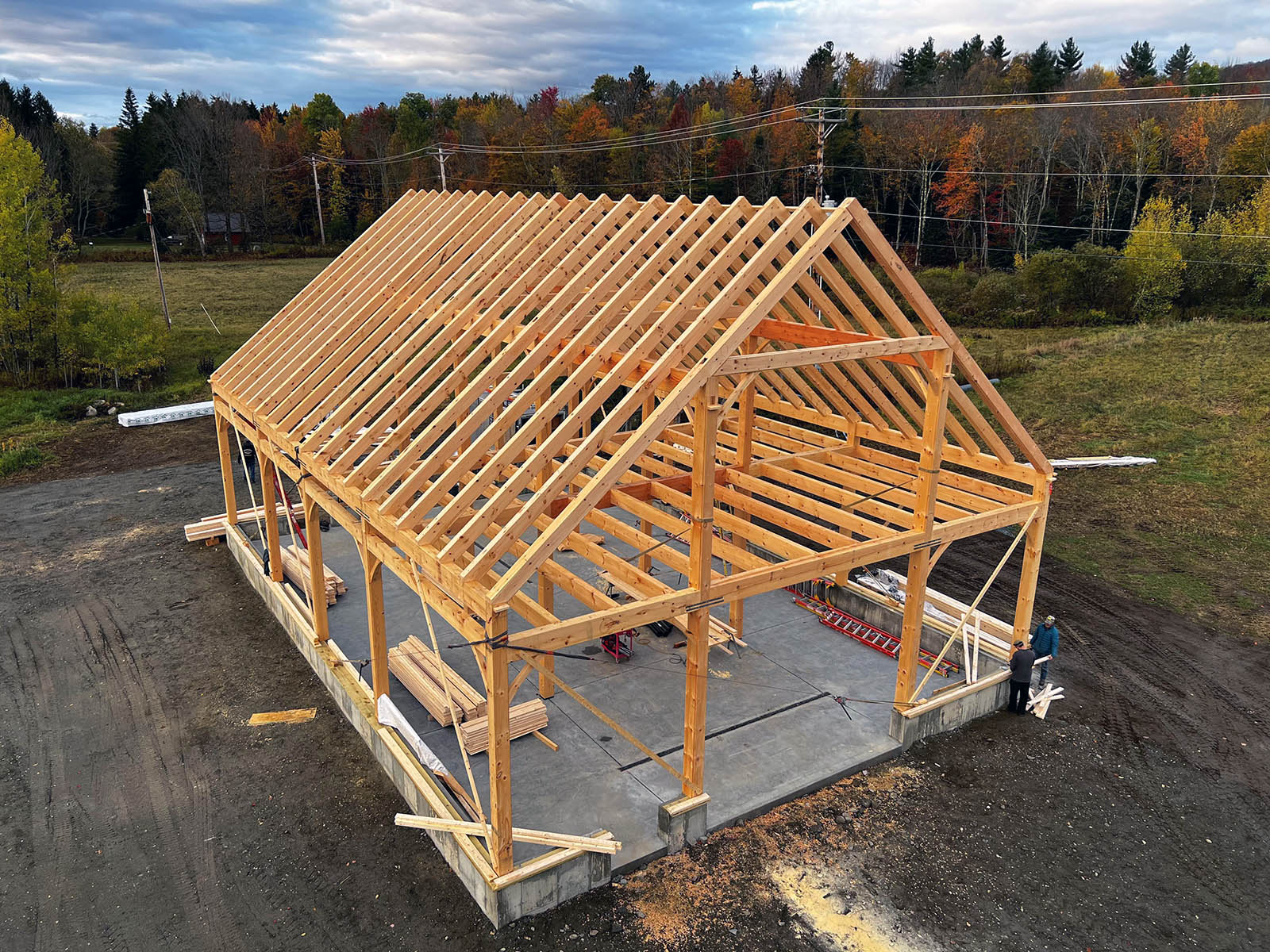
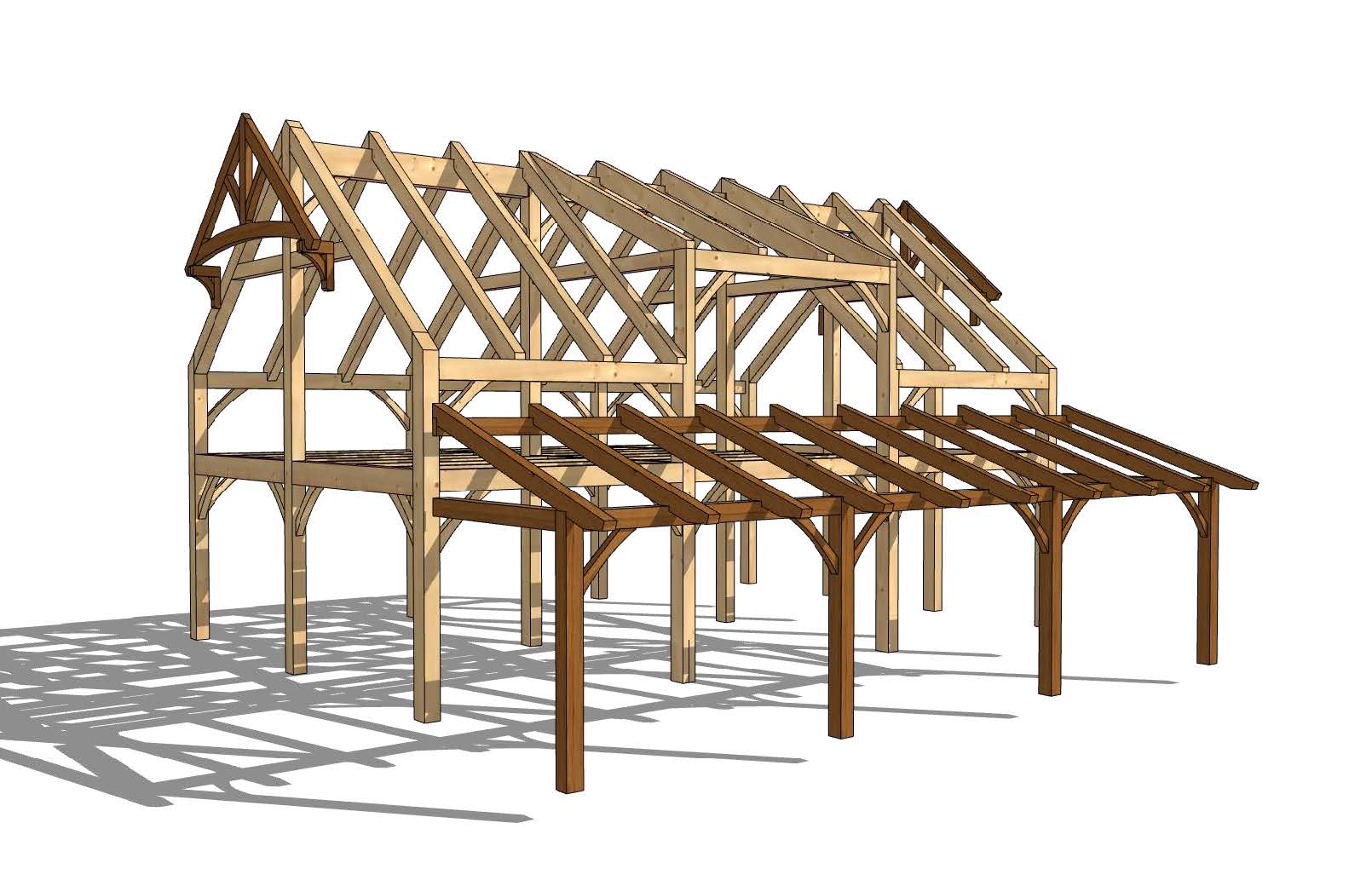
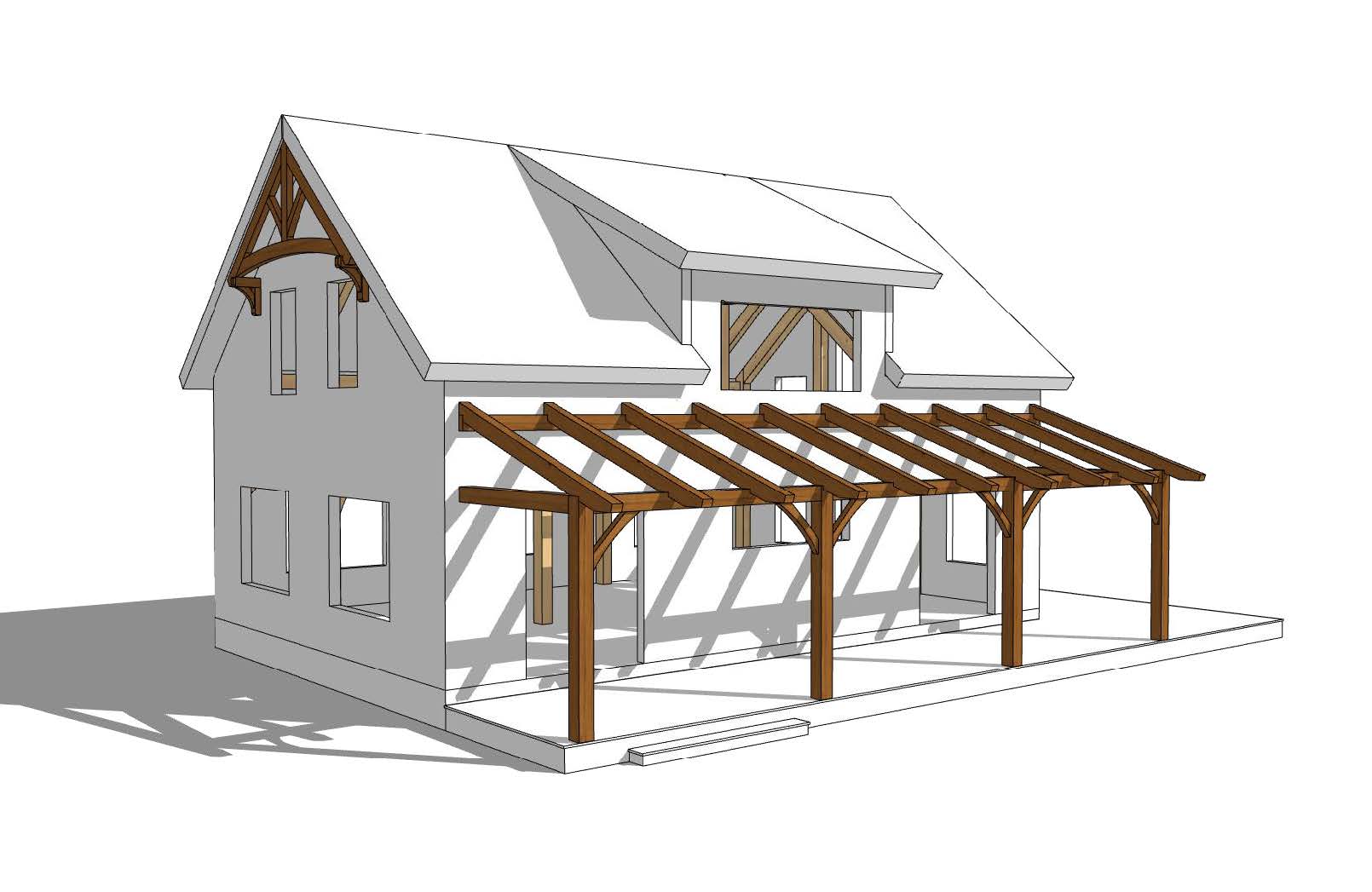
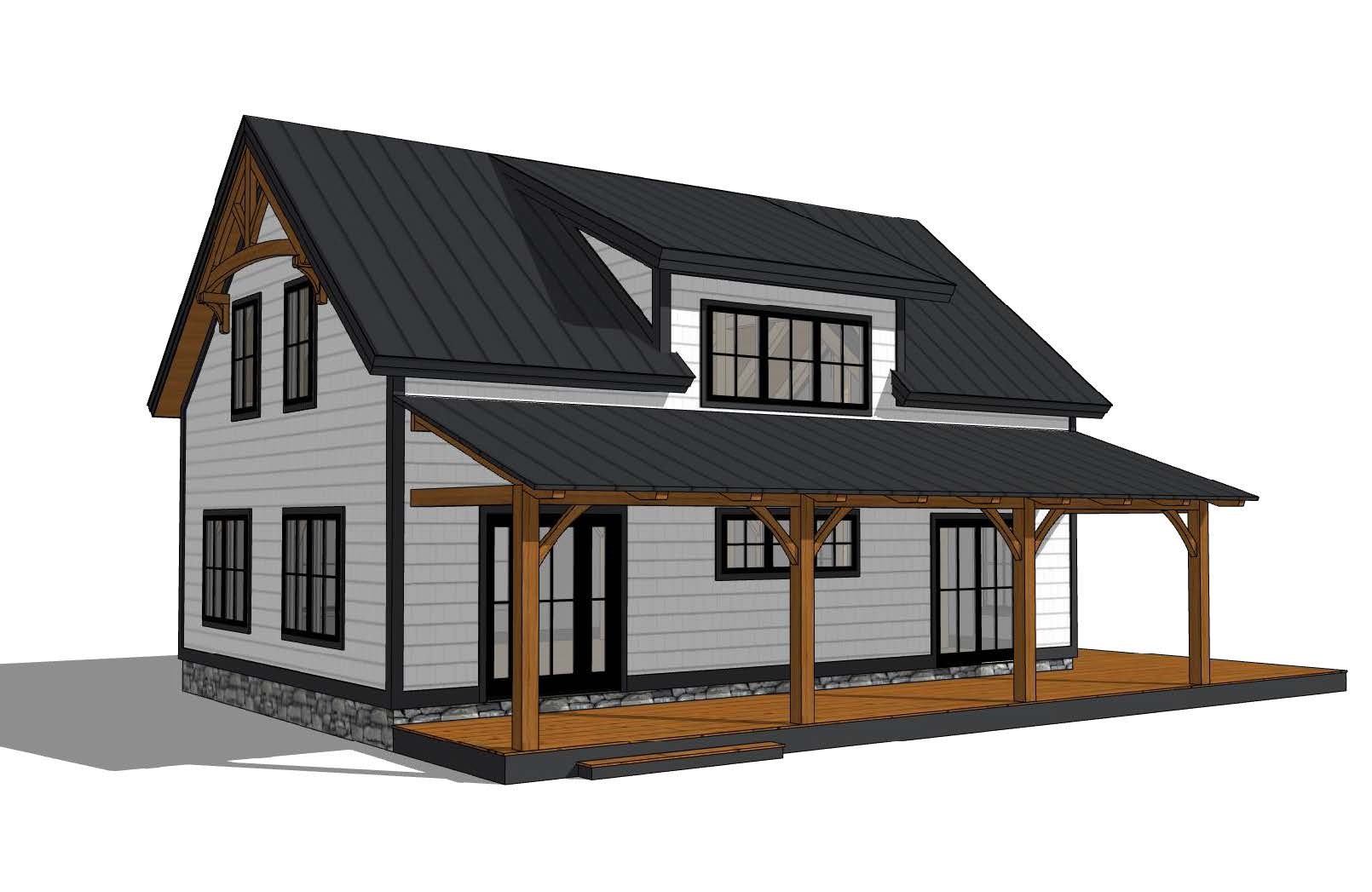
This story-and-a-half timber frame cape home with 4′ knee walls can easily accommodate 2-3 bedrooms, and 2-3 bathrooms, without counting any potential basement space.
This design is very straightforward and buildable, making it very cost effective to get you and your family into a well built, energy efficient home. It can feature a cathedral ceiling living room or a 4th bedroom on the second floor.
The geometric simplicity of this design means you get a lot of living space for a relatively lower cost. It can be easily customized to stretch the dimensions or add on a mud room or garage.
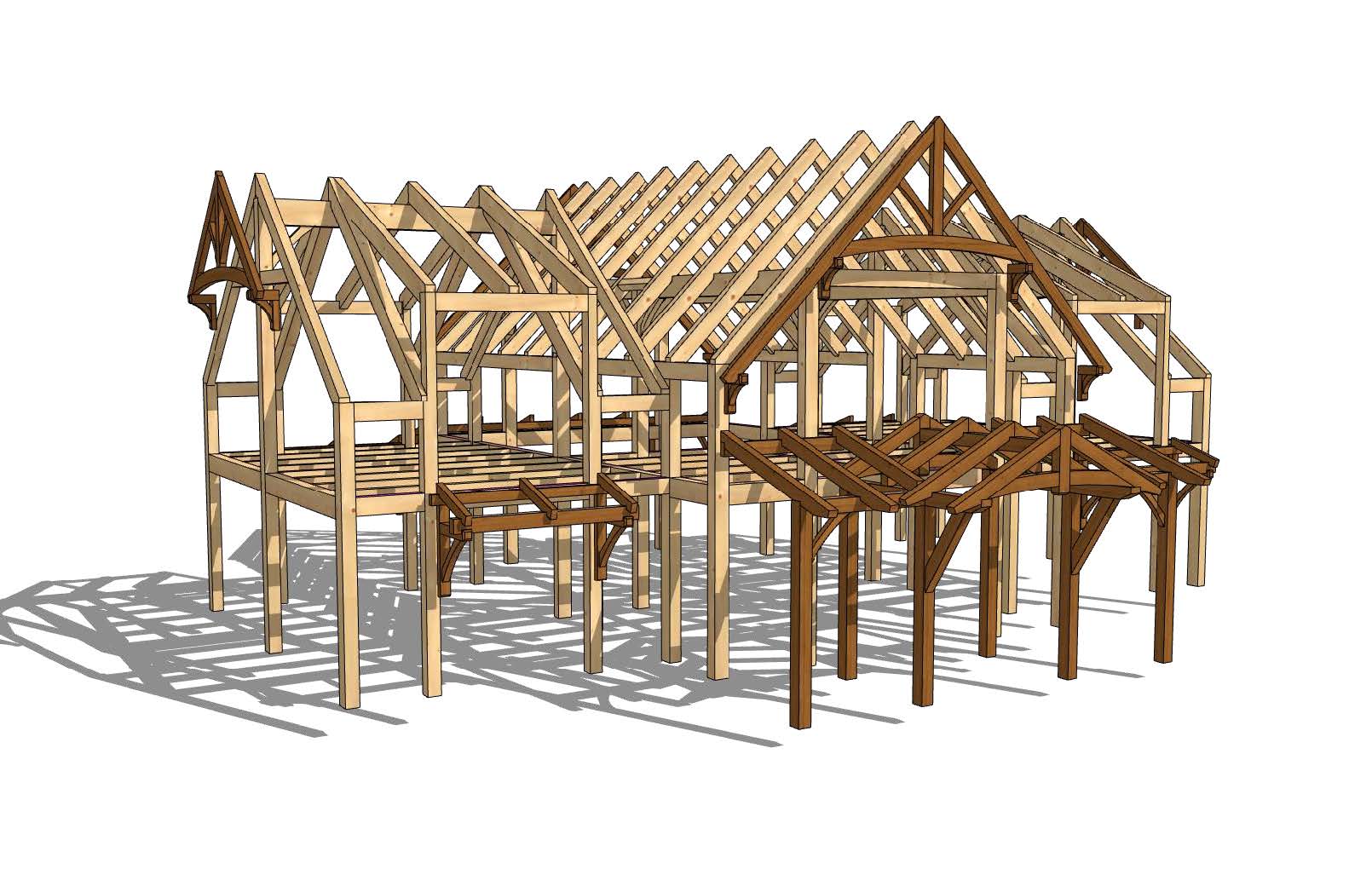
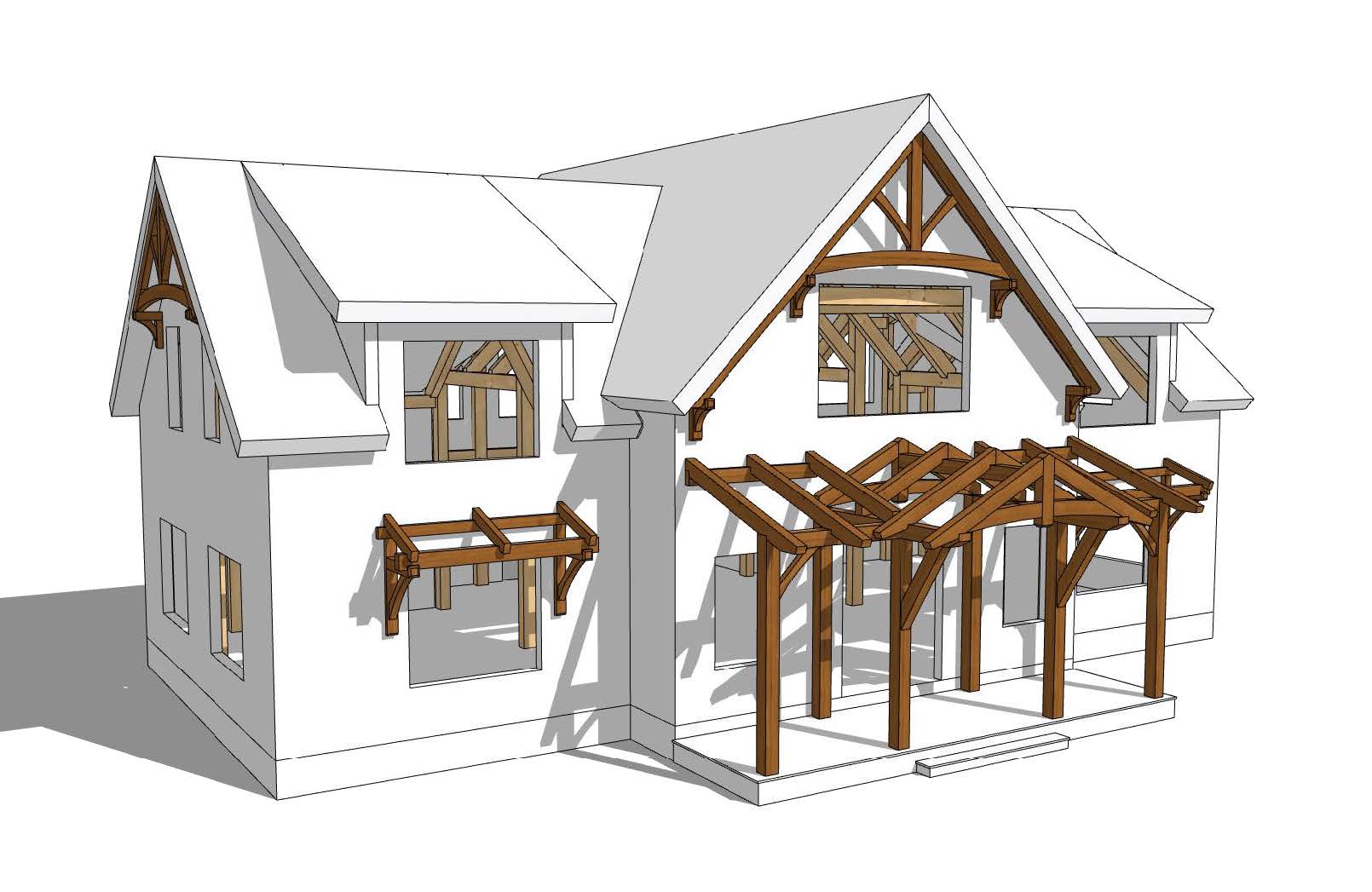
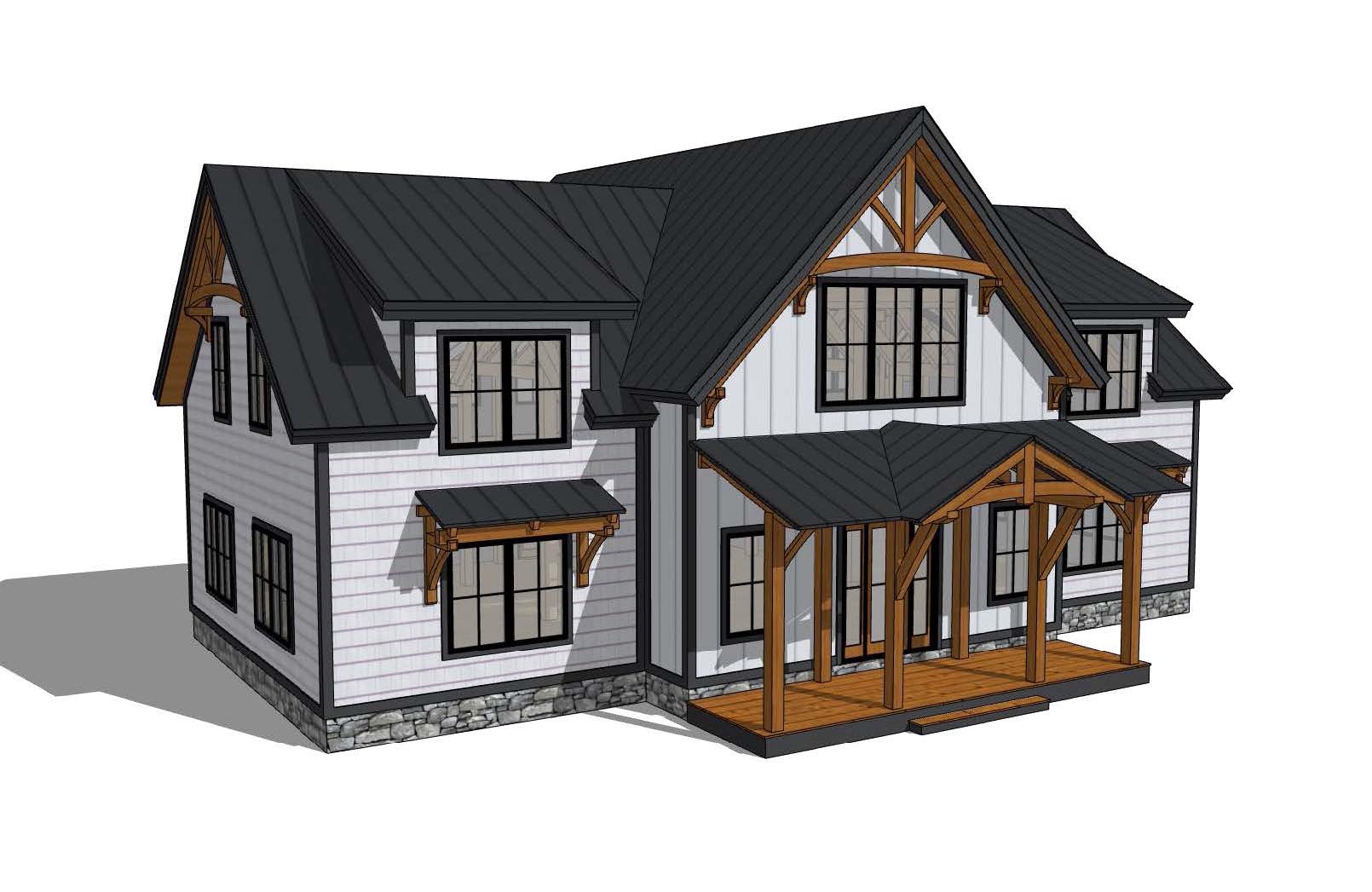
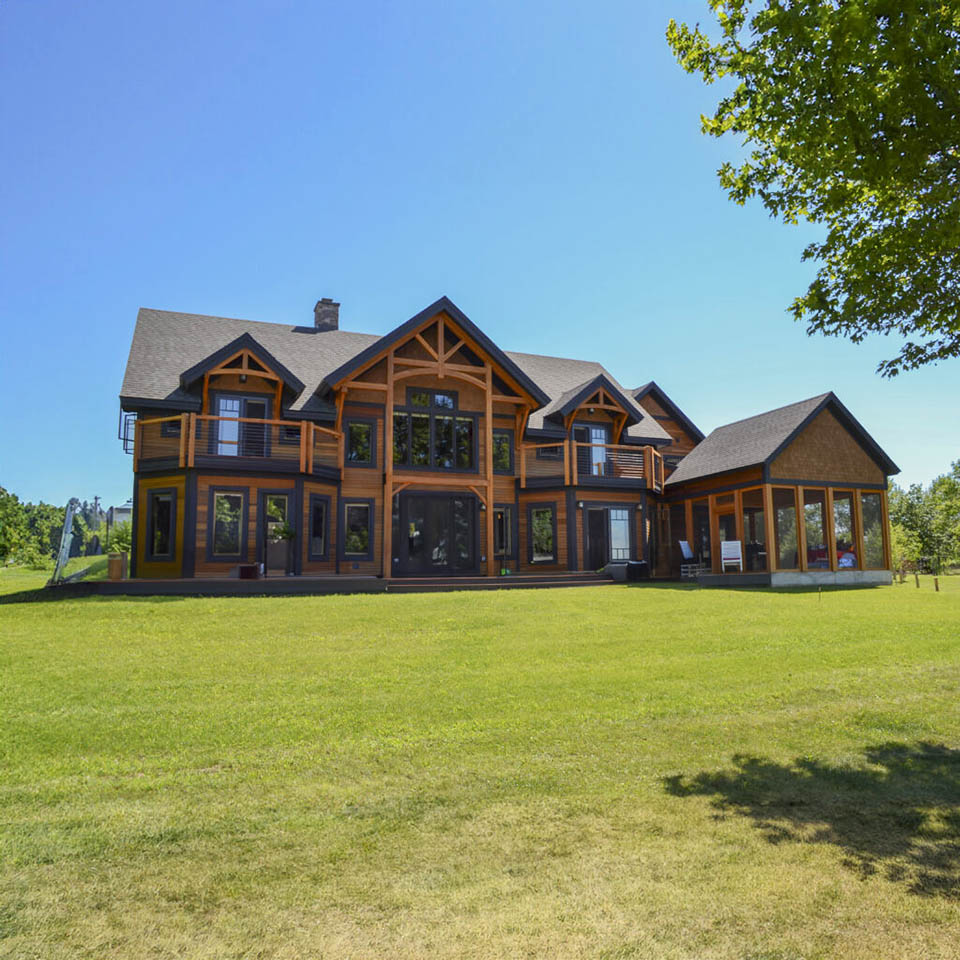
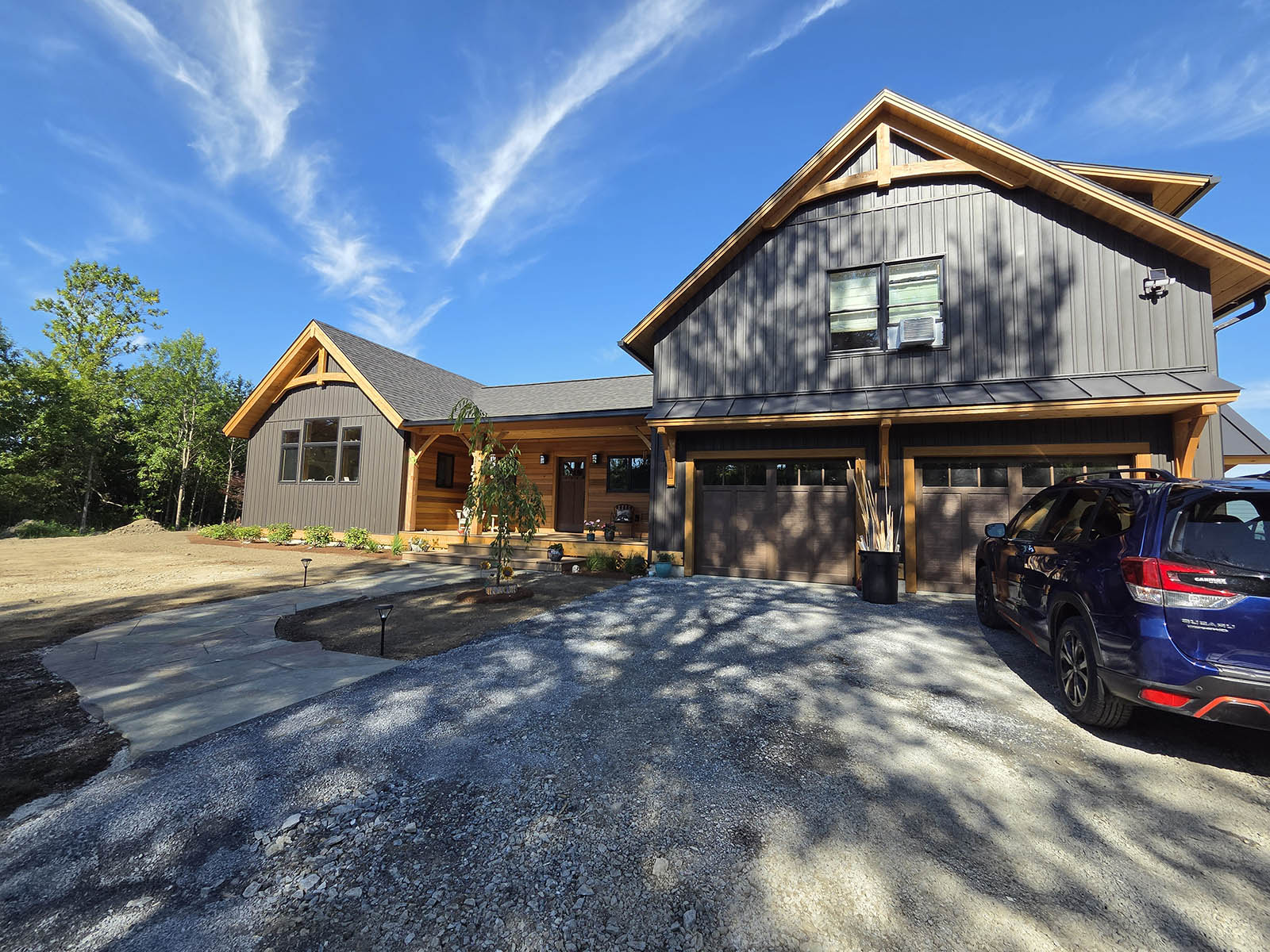
This center core timber frame cape home with two wings has proven to be an extremely popular design due to its large central cathedral ceiling great room, and expansive open concept floor plan.
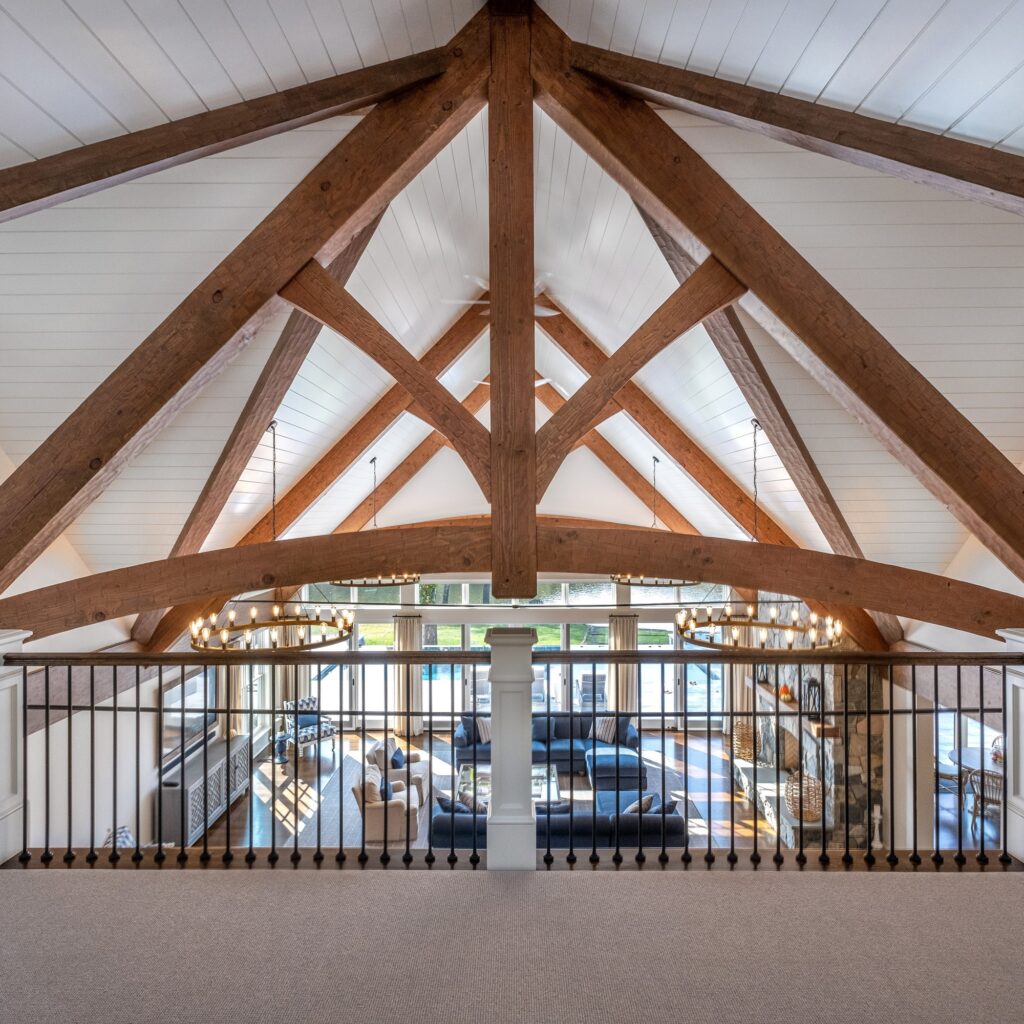
Typically this home is built with a 24′ x 36‘ cape at the core, and two 28 x 16’ wings attached along the long (eave) walls. With one wing dedicated to the kitchen and dining room, the other can become your primary bedroom suite, ideal for aging in place. The second floor loft lets you look out over the great room and admire the large rafters and principal purlins.
This design can easily accommodate 4-5 bedrooms and 3-4 bathrooms for large families or those who like to entertain out-of-town guests. The shed or gable dormers on the roof add character to the profile of the home, and let lots of light into the second floor bedrooms. By attaching a mudroom to one wing, you can also expand this design to include a garage, with a second floor In-Law suite.
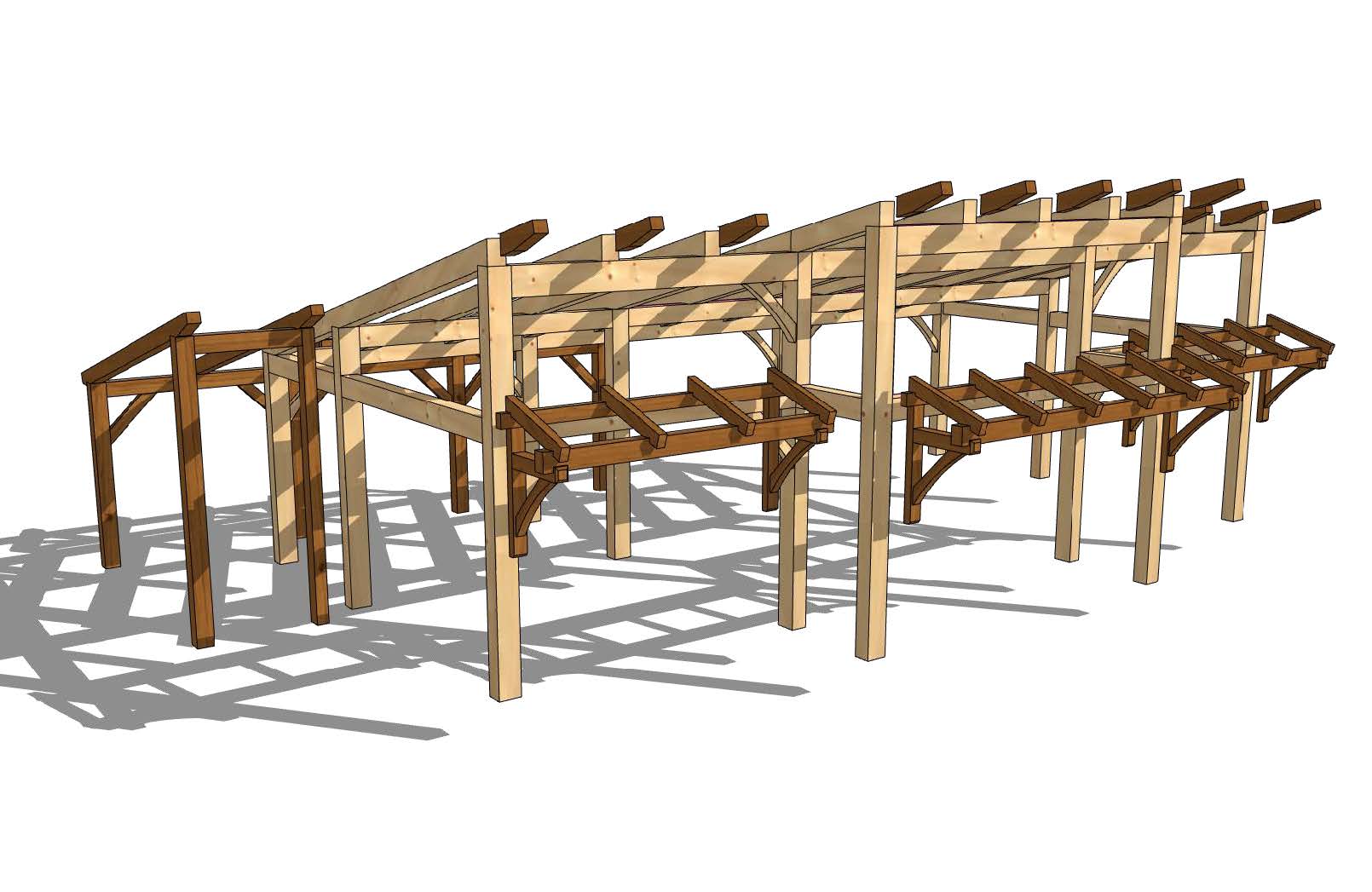
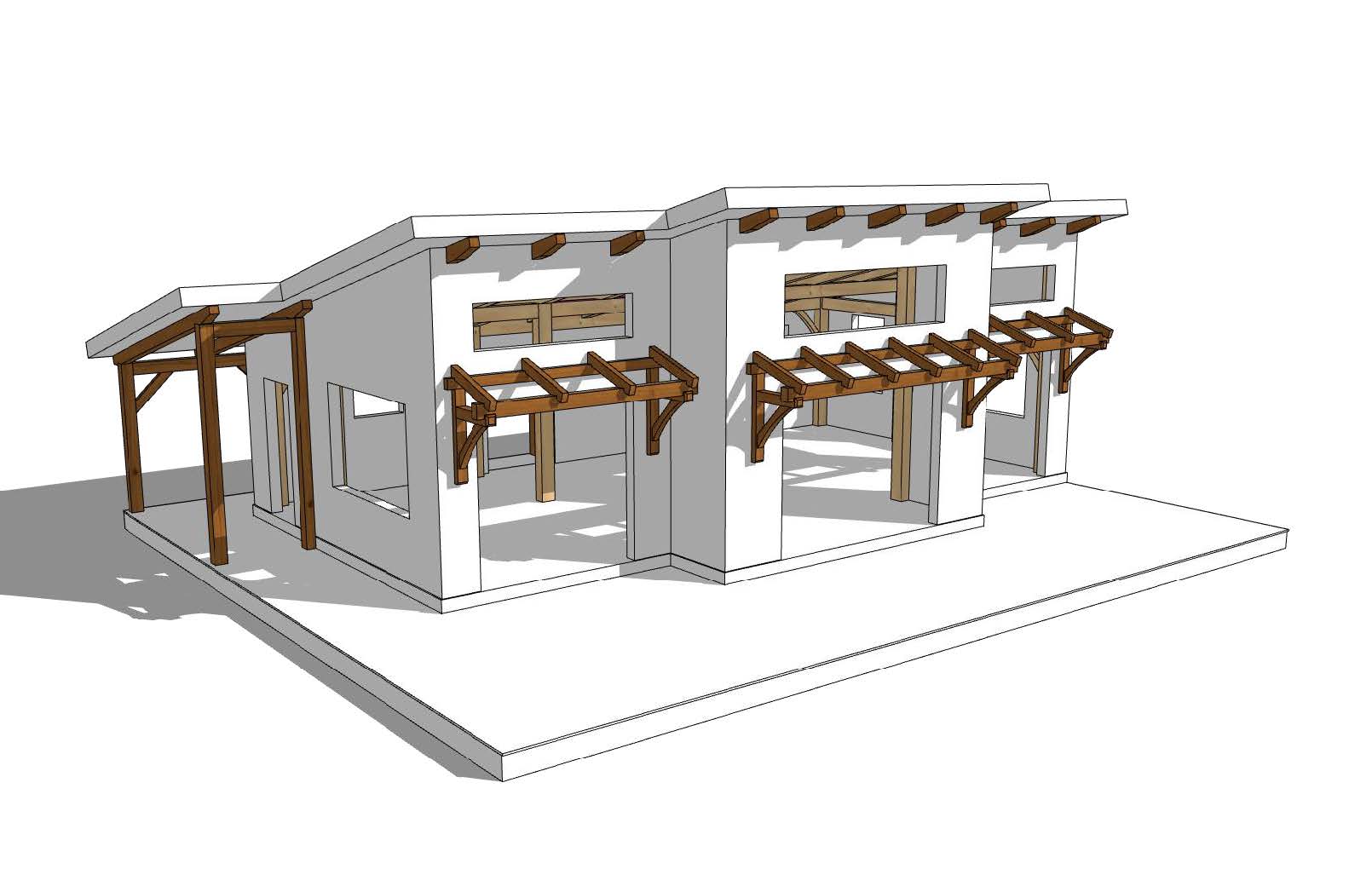
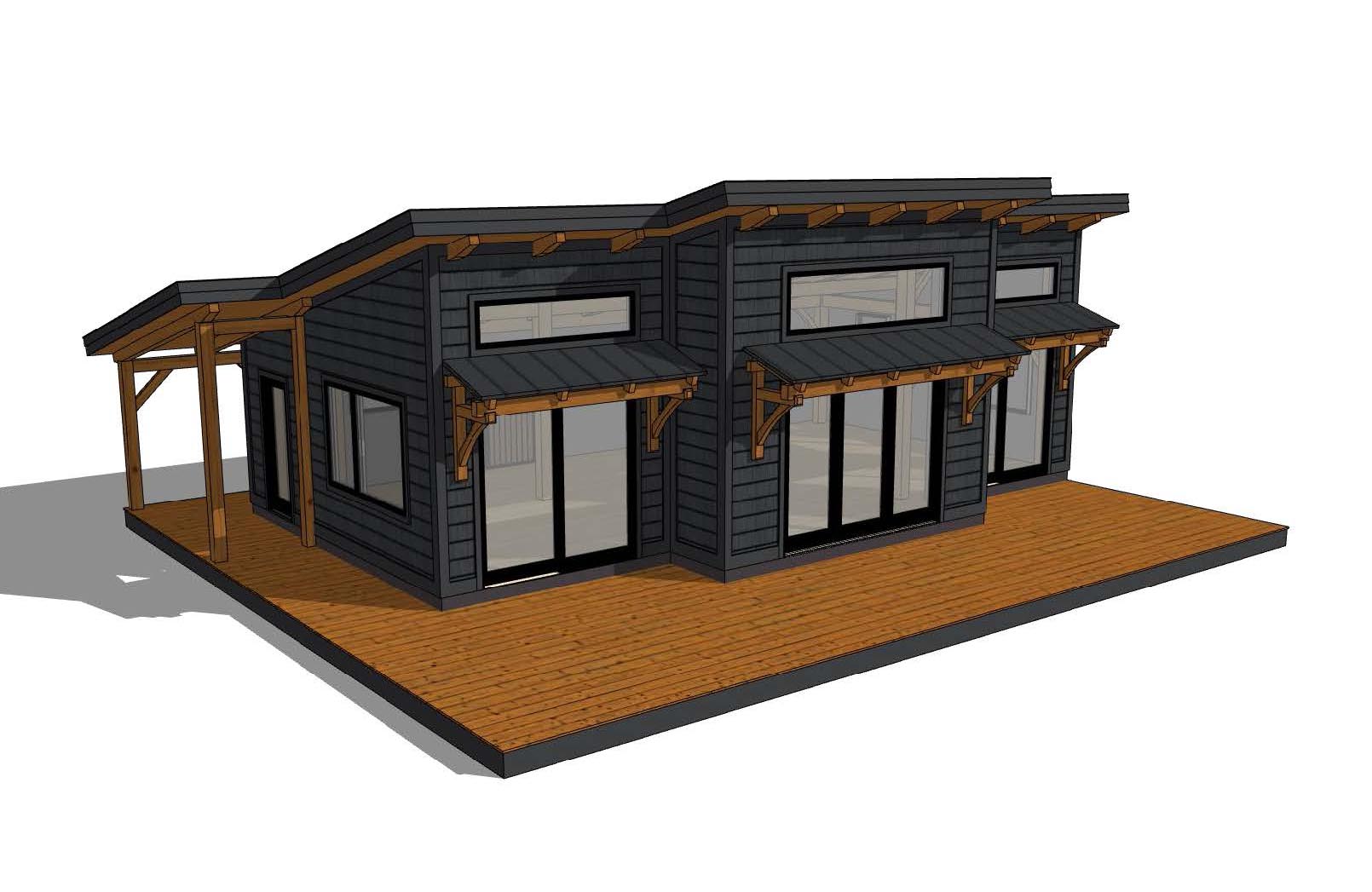
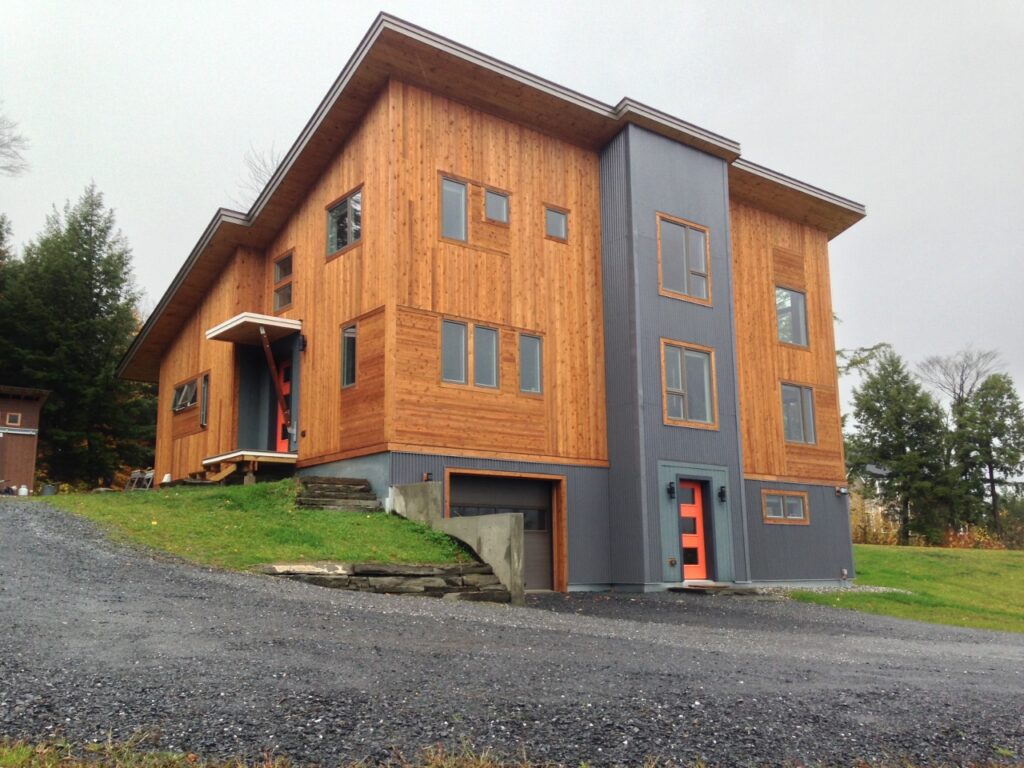
This contemporary style timber frame home features a mono-pitch roof, often oriented on the build site to maximize views out the rear, higher side. When standing in the central living room, large rafters call the eye up and out, creating a strikingly large-feeling space inside of a relatively small footprint.
This design is typically built at 20′ x 40′ dimensions with a small central bump out in the living room, yielding ~ 800-900 sq ft feet on the main floor. When paired with a full or walkout basement, this home can reach 1800 square feet, accommodating 2-3 bedrooms and 2-3 bathrooms.
Given its overall geometric simplicity, it is one of the more affordable timber frame and SIP packages, delivering a moderate amount of livable space for a modest $/sqft cost than other, more complex designs
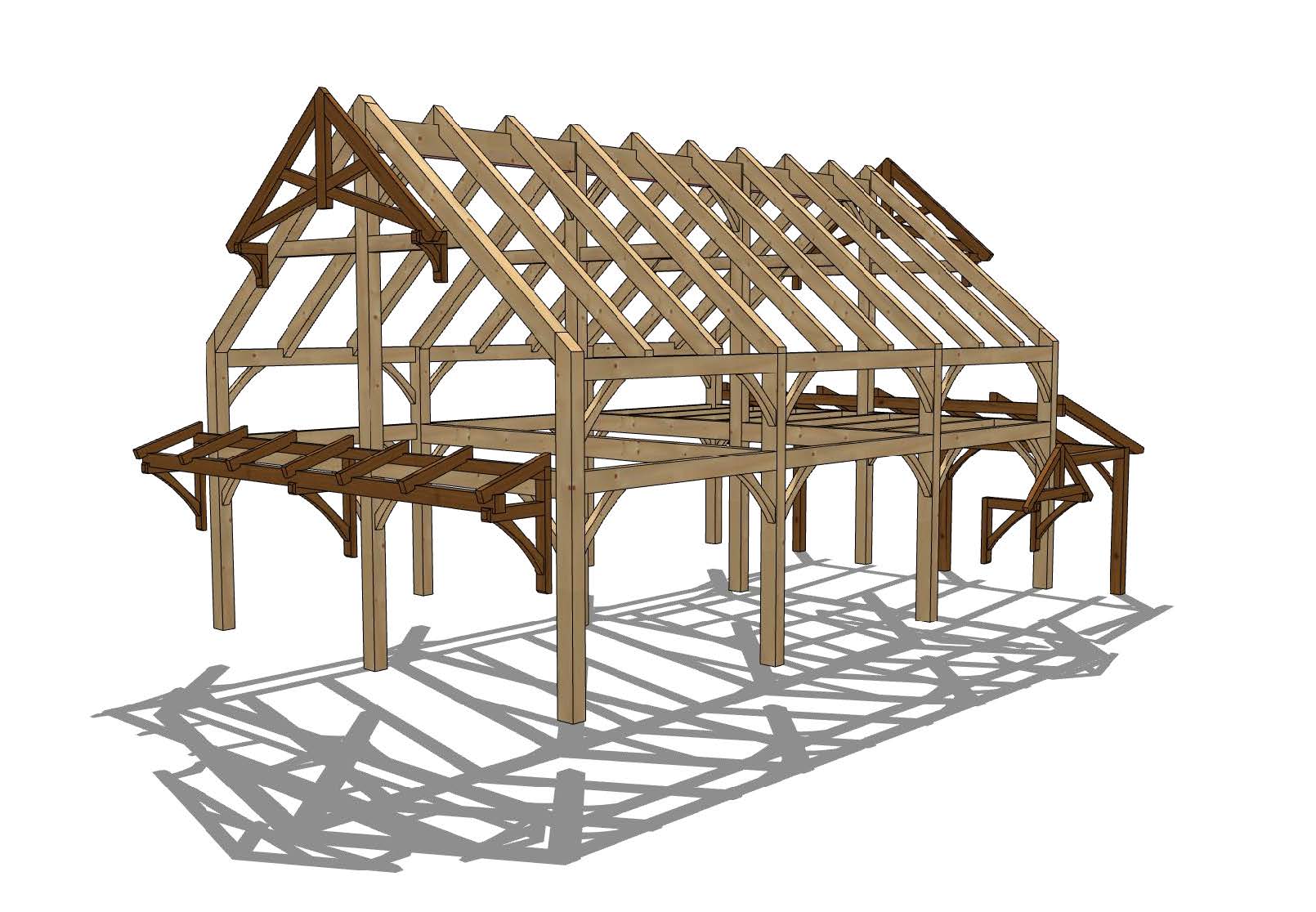
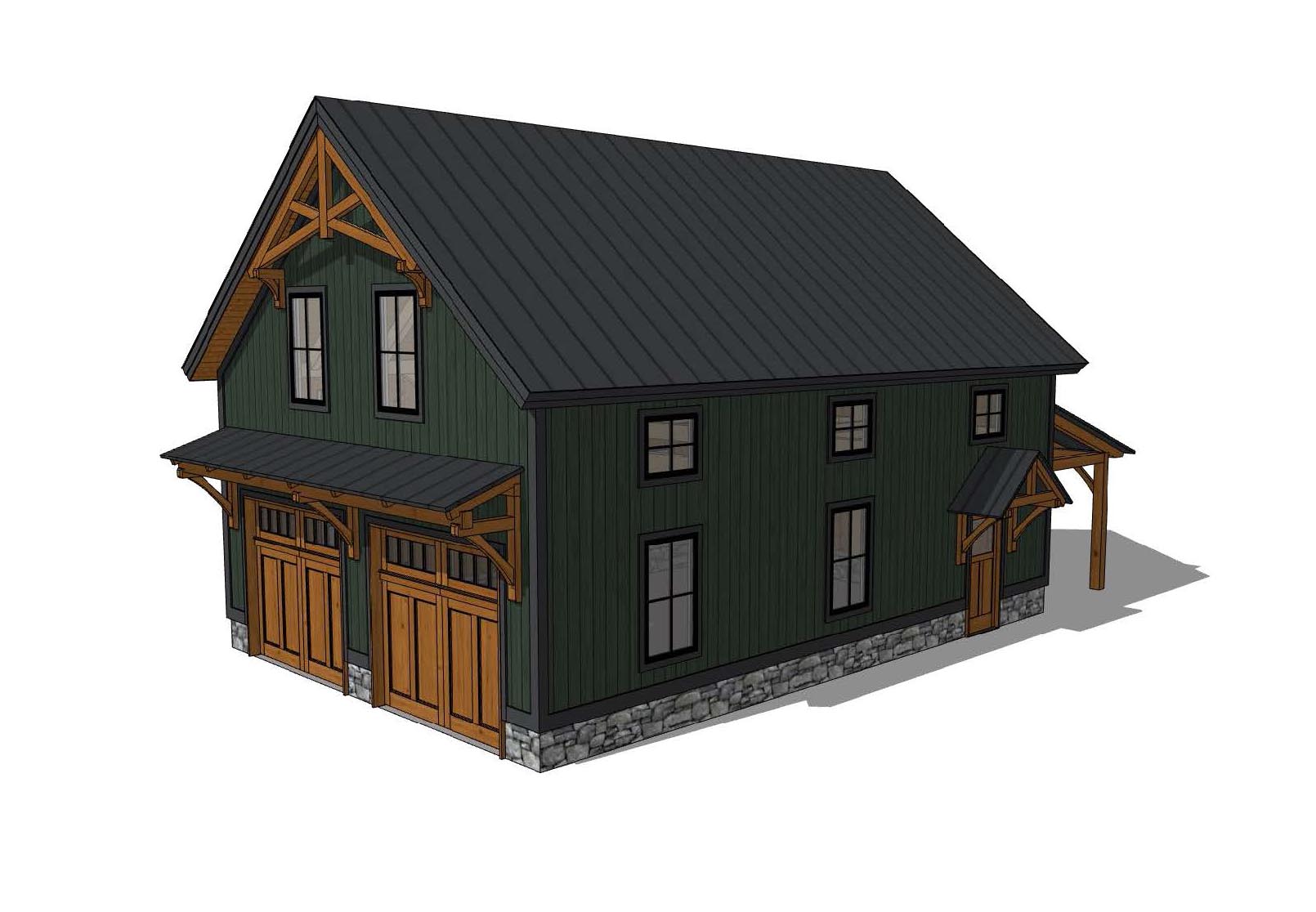
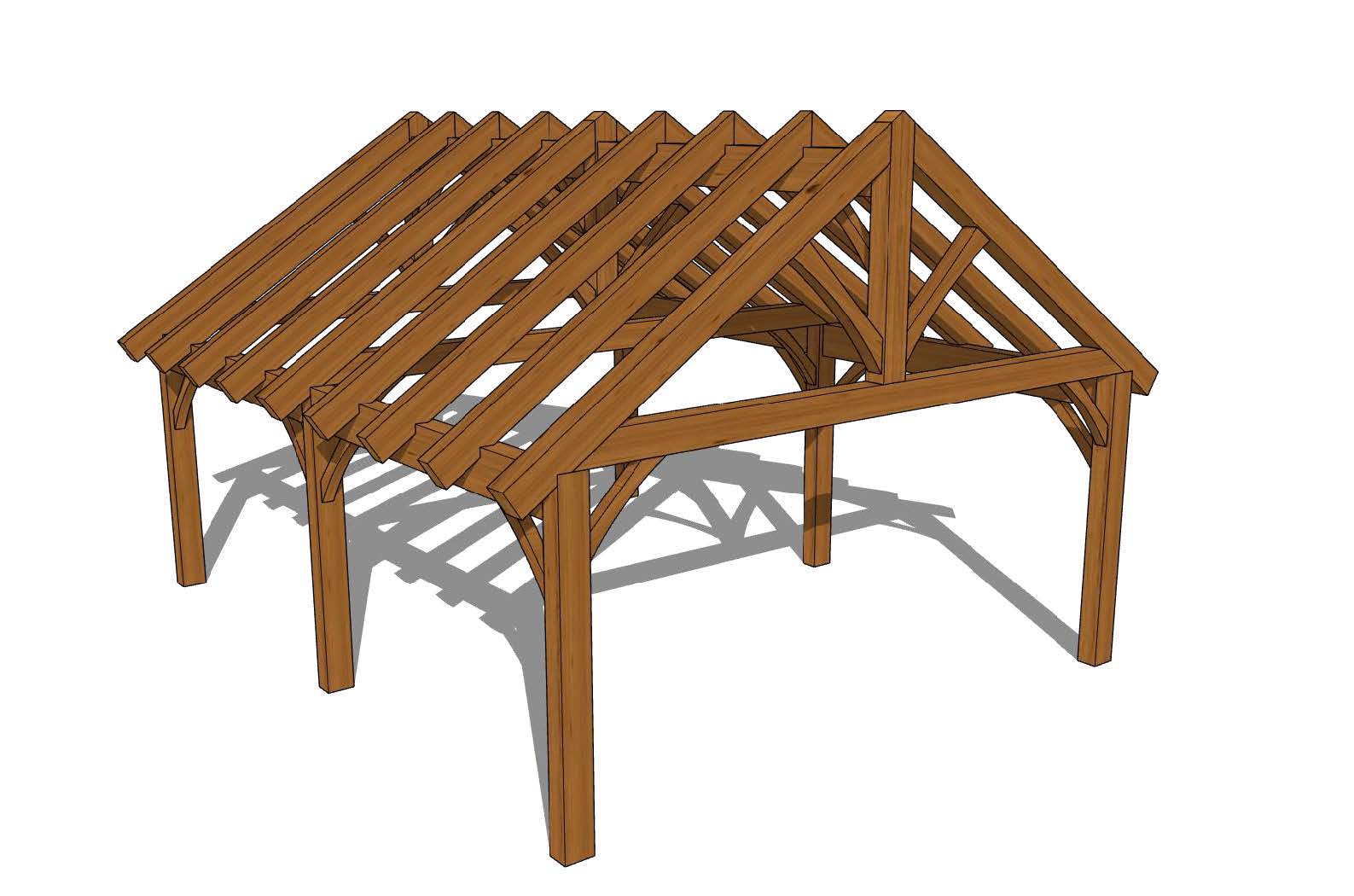
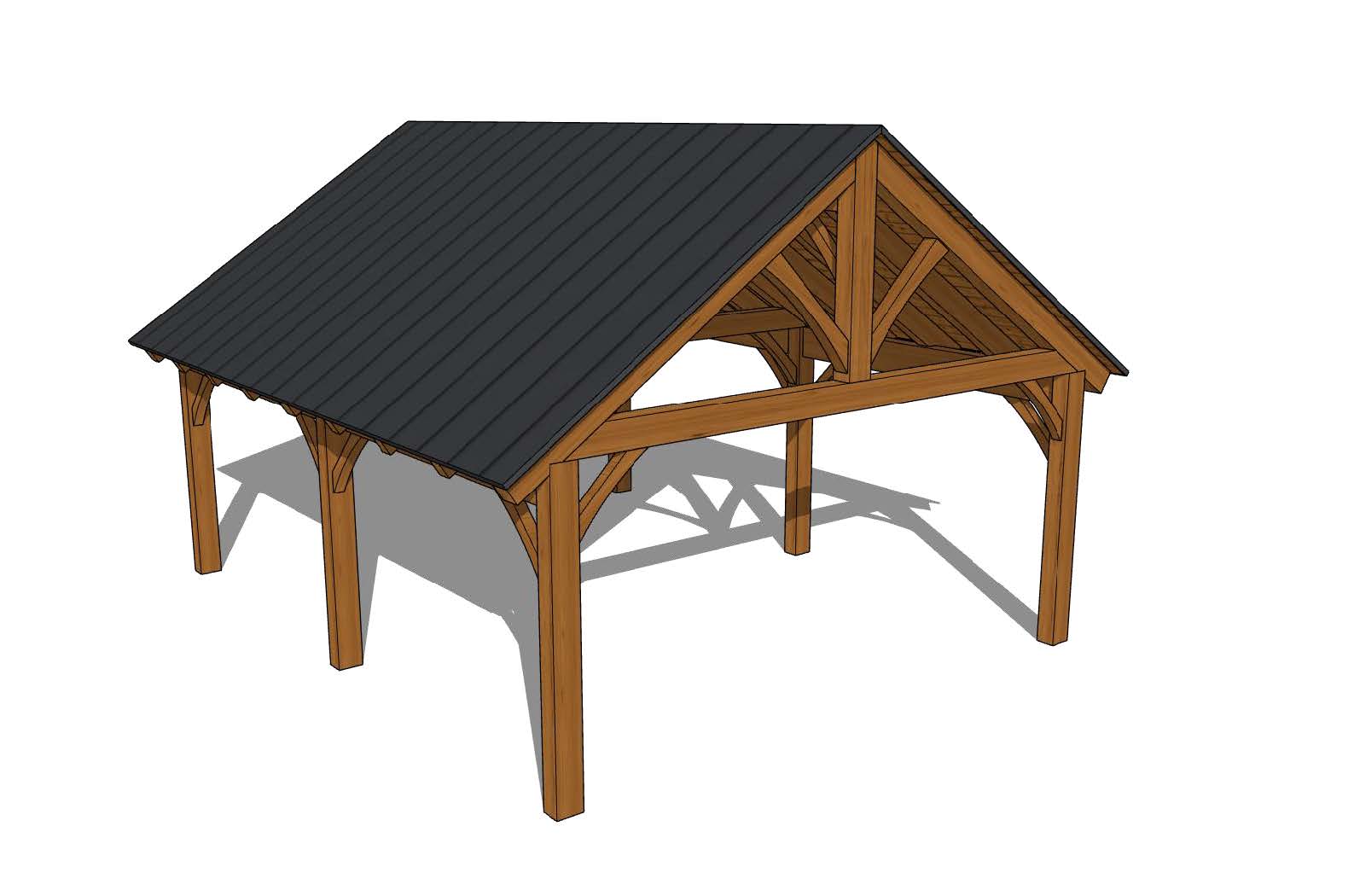
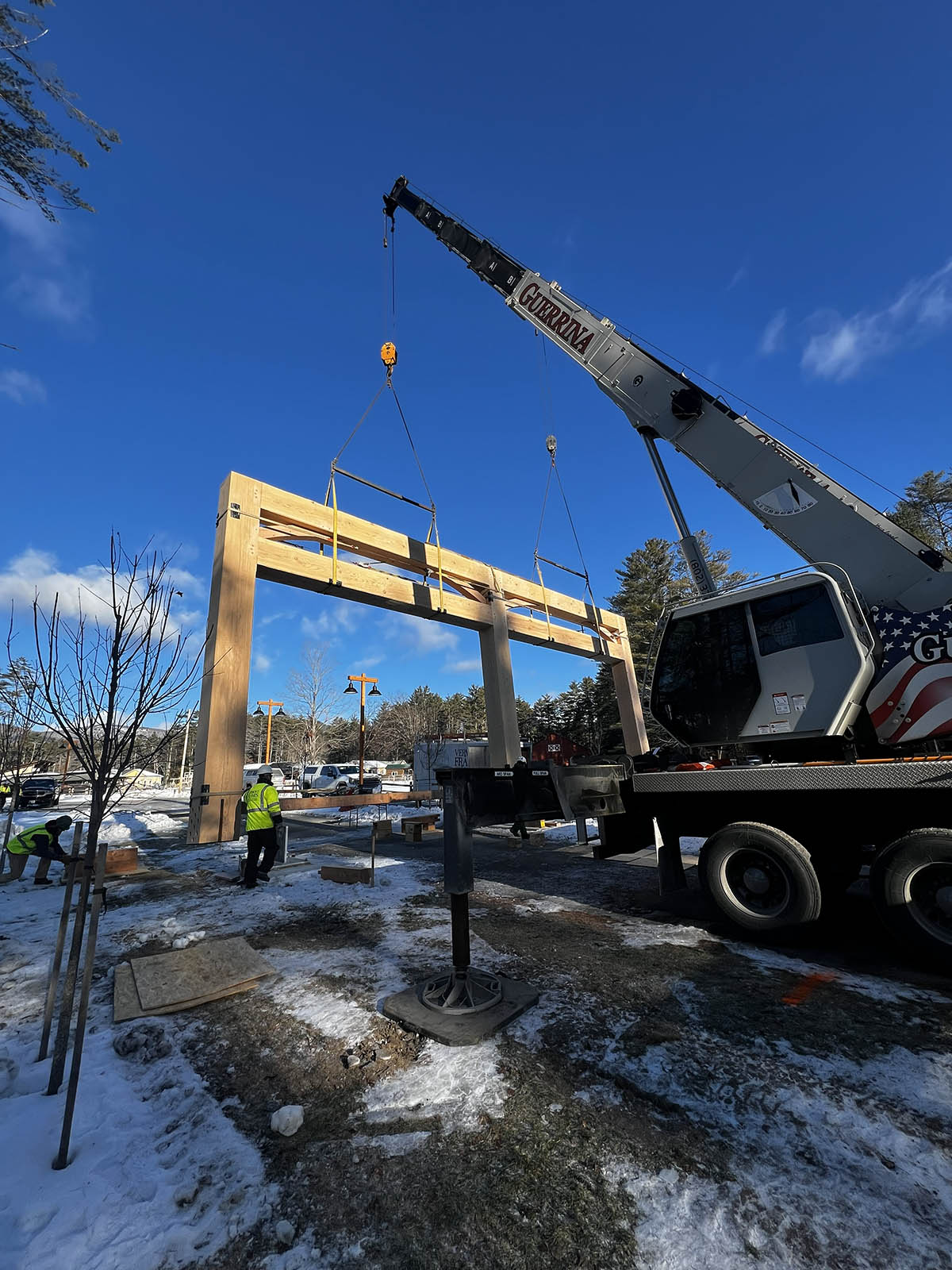
A timber frame pavilion is a great way to create an elegant outdoor entertaining space to host friends and family for BBQ’s and relaxing outdoor evenings. They are often used as carports to shelter vehicles and mount solar panels, as well as for hosting weddings other significant events.
A pavilion is more than just a structure, it’s a space that enriches your lifestyle by offering comfort, style and versatility. Whether your goal is to entertain guests, relax in solitude, or celebrate special moments, a pavilion could be the perfect solution.