
The choice of wood species plays a significant role in the overall cost of a timber frame project. Different species vary in price due to factors like availability, strength, and appearance. For example, Douglas fir is often preferred for its structural integrity and aesthetic appeal, but can be more expensive than locally sourced options like Eastern white pine.
Douglas Fir
Eastern White Pine
The complexity of timber trusses can significantly affect both material and labor costs in a project. Simple truss designs, like king post or queen post trusses, are more affordable, while more intricate designs, such as hammer beam or scissor trusses, require additional craftsmanship and engineering. Complex trusses add architectural grandeur but come with increased time and expense for construction and installation.
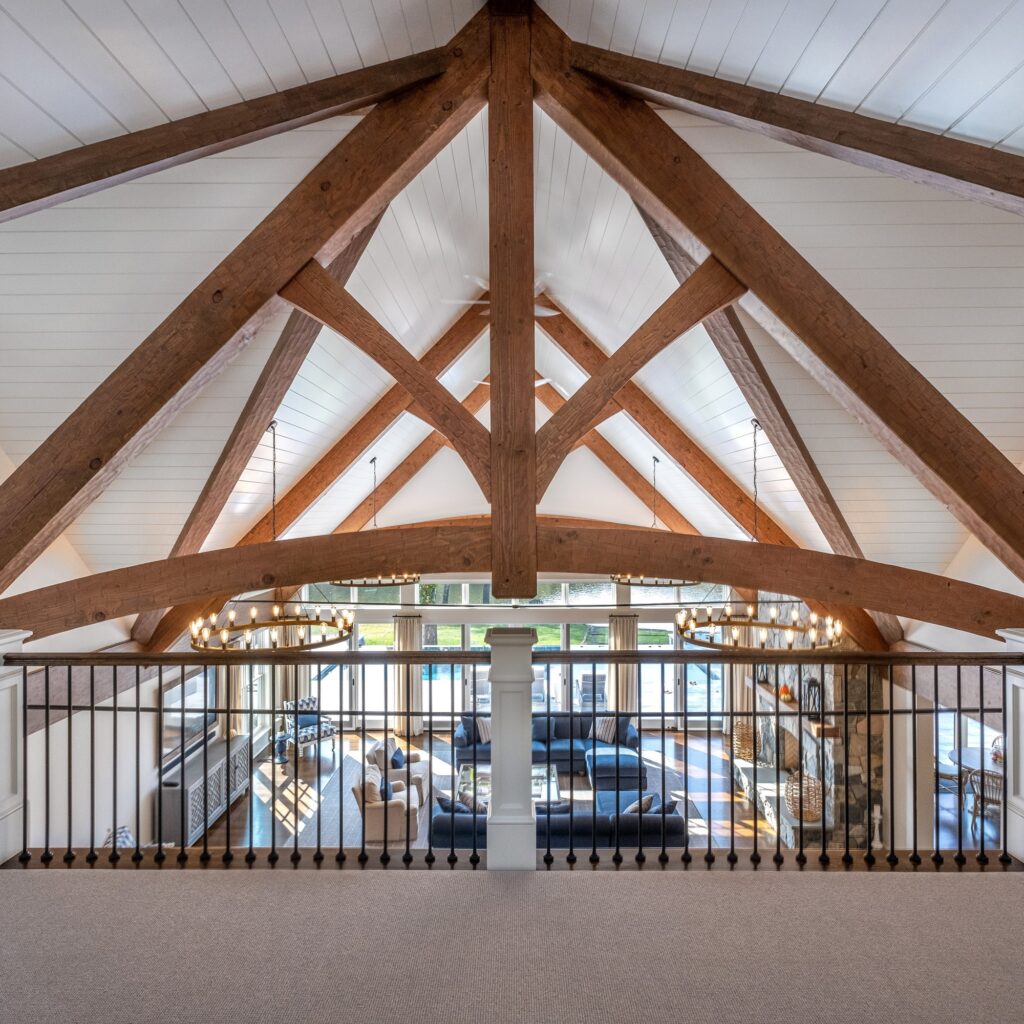
King Post Truss
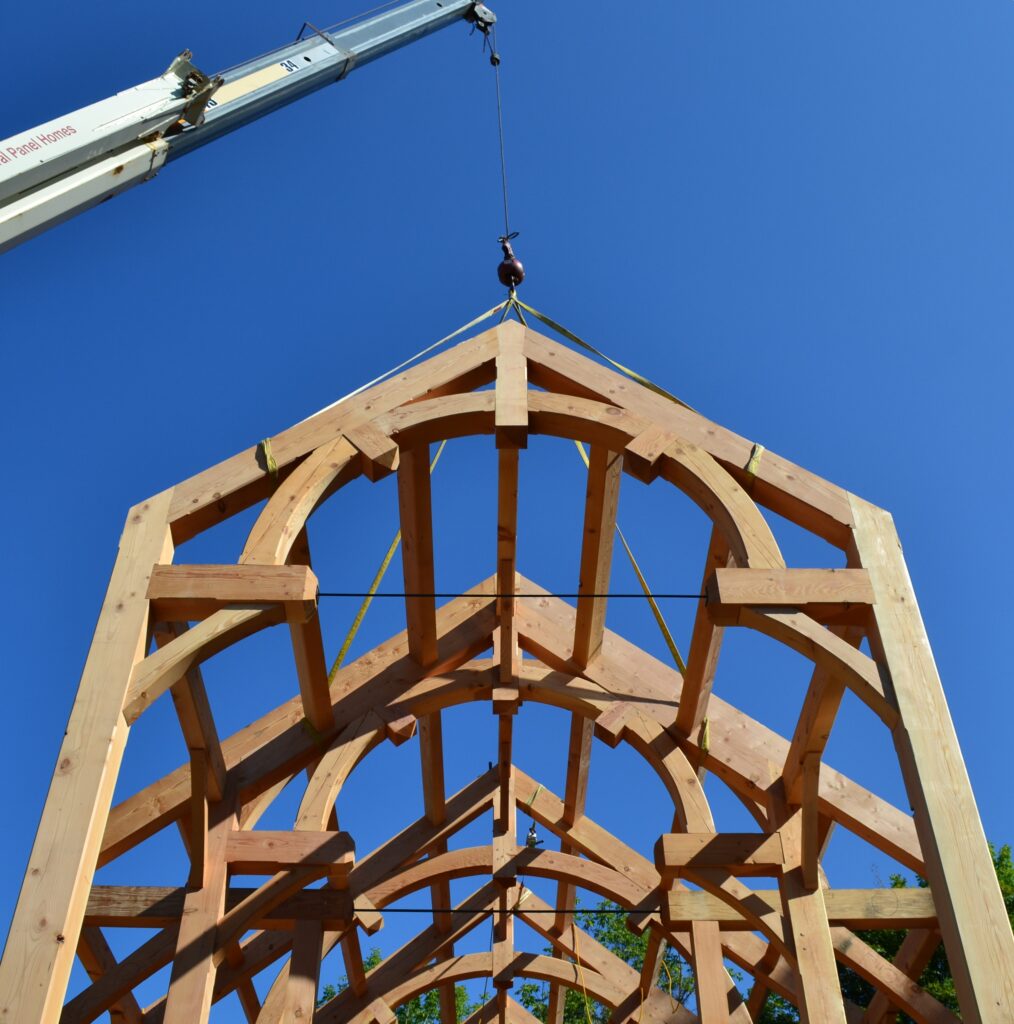
Hammer Beam Truss
The complexity of the roof system significantly impacts the cost of a timber frame project. Simple gable or shed roofs are more cost-effective, while intricate designs like hips, valleys, and dormers require more labor and materials, driving up expenses. A more complex roof can add architectural interest but may also increase the time needed for both design and construction.

Simple Roof System
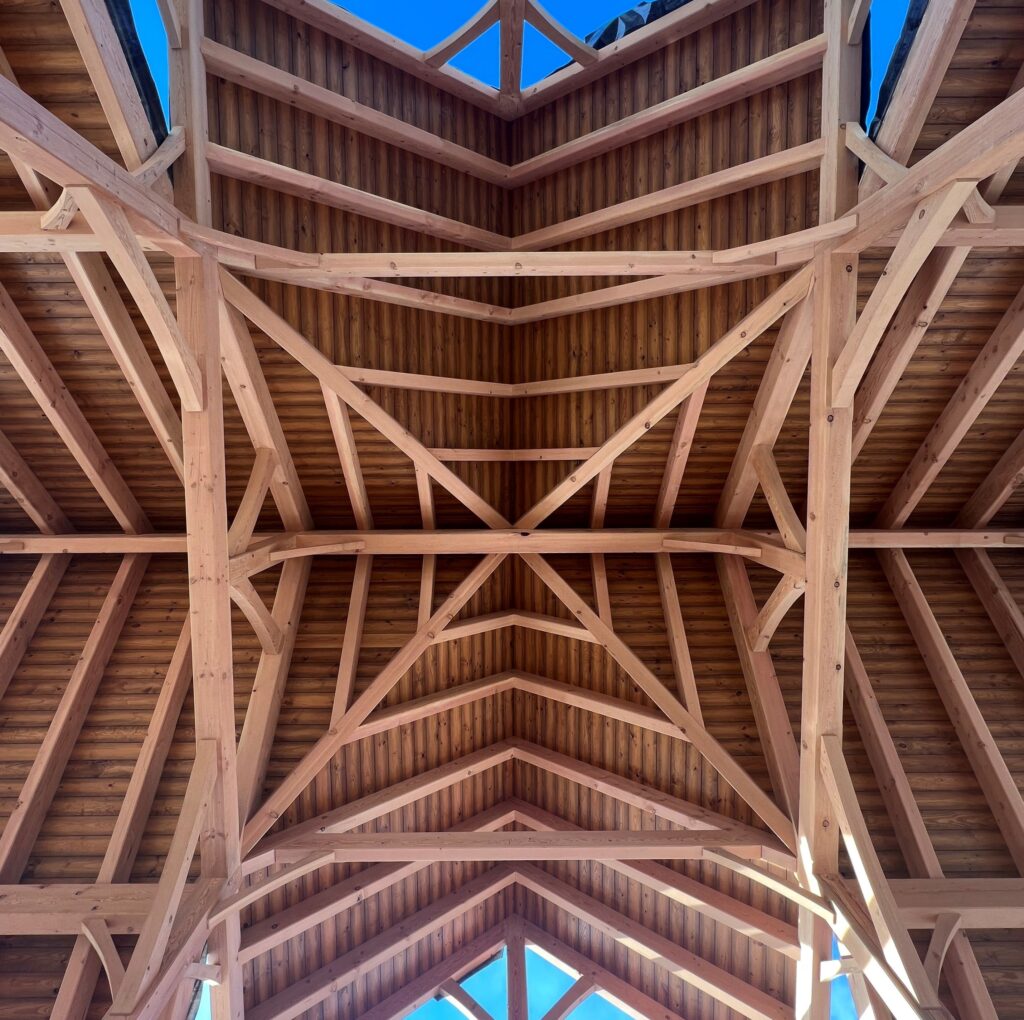
Complex Roof System
Design drawings incorporating complex geometric shapes into a timber frame design, such as curves or intricate angles, can greatly influence project costs. These unique elements require specialized craftsmanship and more precise engineering, which increases both labor and material expenses. While complex shapes can create stunning visual appeal, they also demand a higher level of expertise and time to execute.
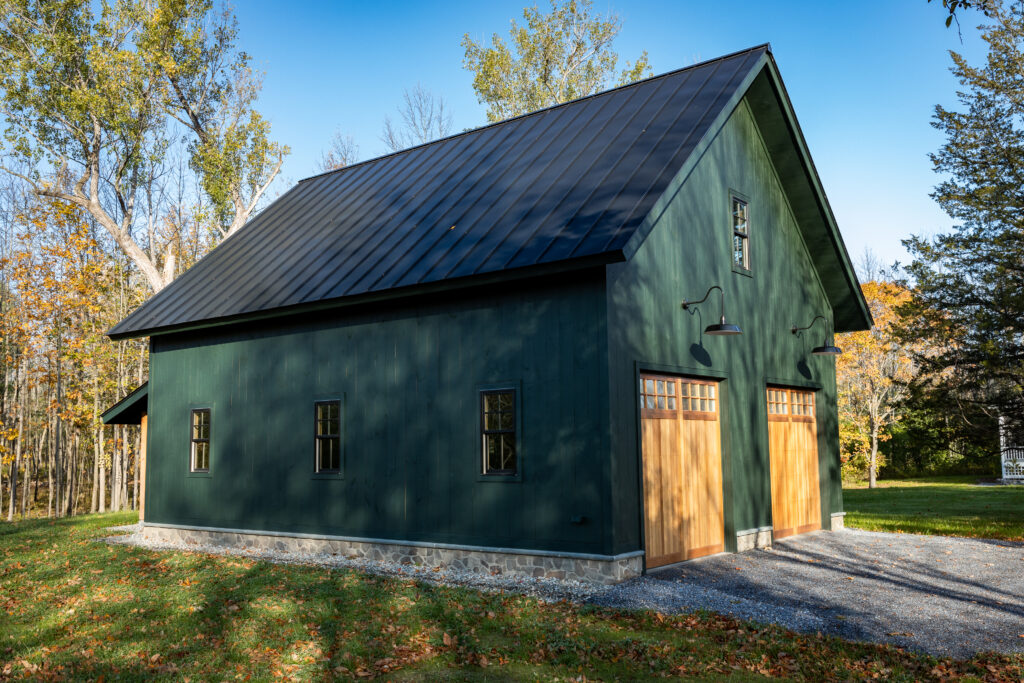
Simple Building Shape
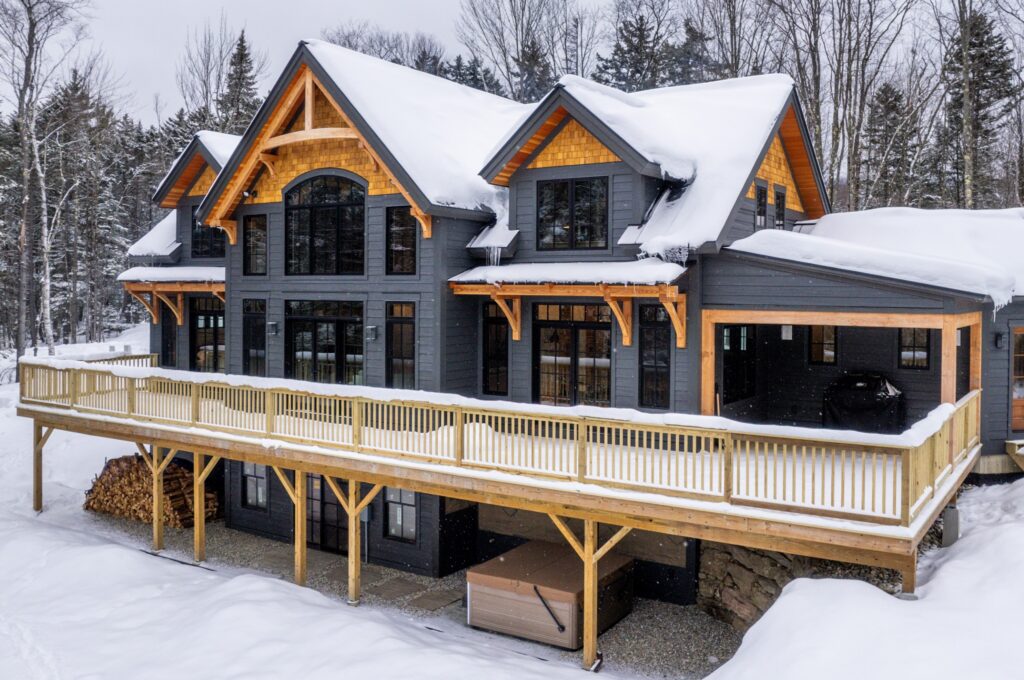
Complex Building Shape
Build site accessibility plays a crucial role in determining project costs. Sites that are hard to reach, have steep terrain, or lack proper access roads can increase labor time and transportation costs for materials and equipment. Ensuring easy access to the site can help streamline the construction process and reduce unexpected expenses.
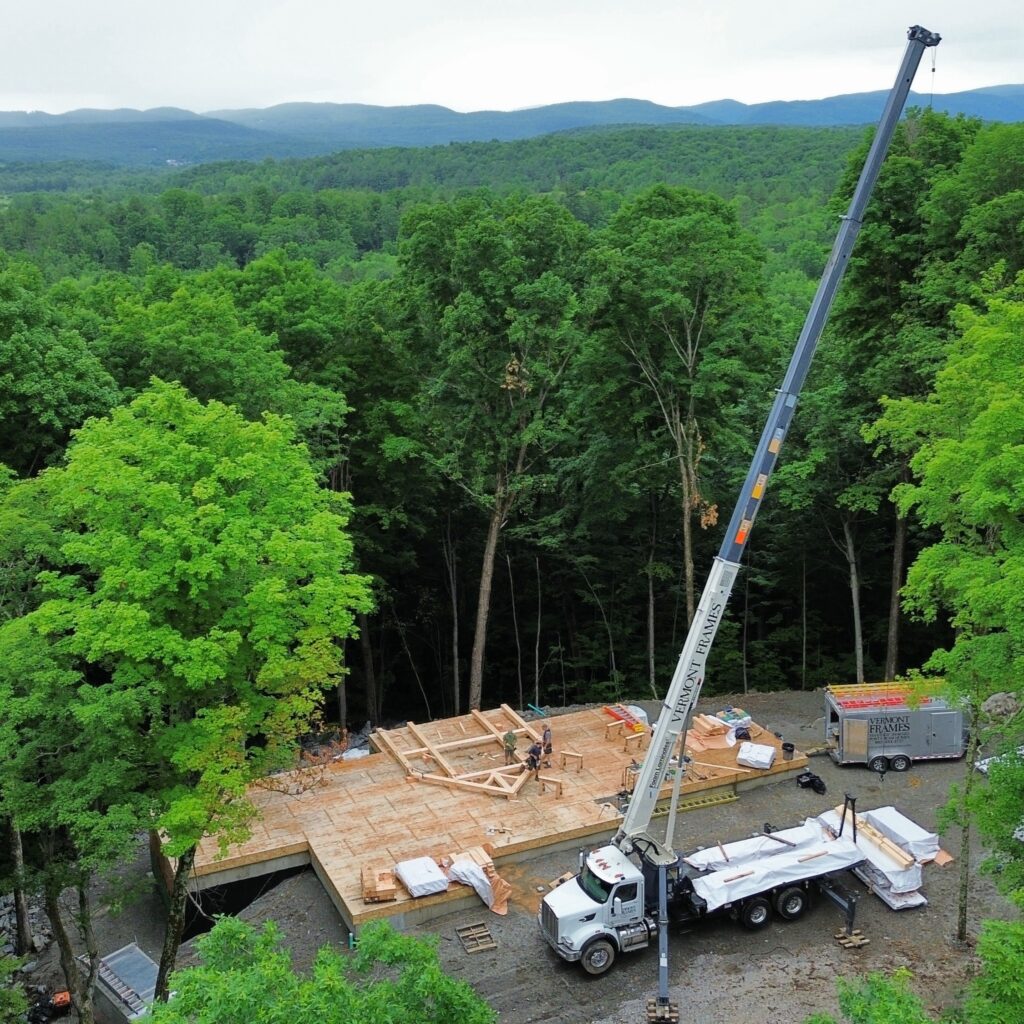
Easy to reach
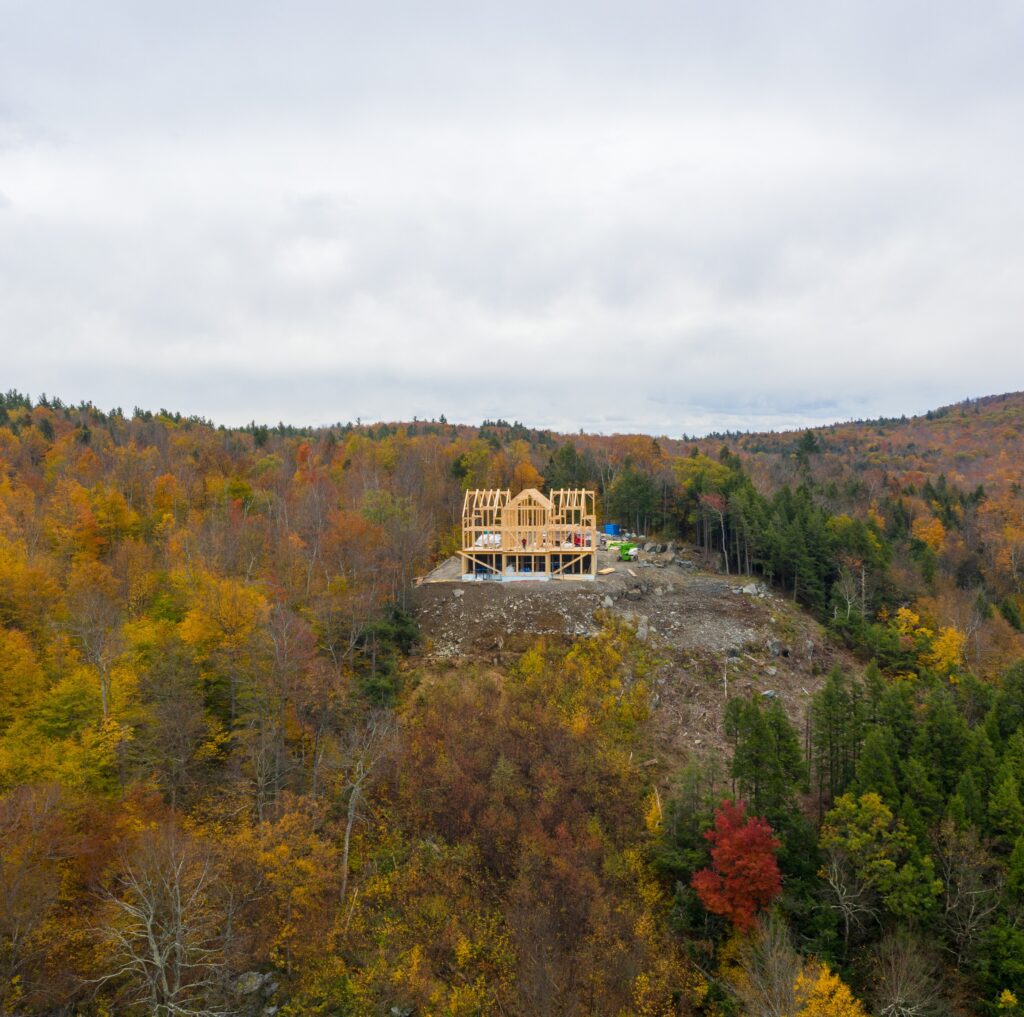
Difficult to reach
Exterior decorative timber elements, such as exposed beams, trusses, or brackets, add character and visual appeal to a timber frame home but can also increase costs. These details require additional materials and skilled craftsmanship to install, especially if custom designs are involved. While decorative elements enhance the overall aesthetic, they do cost more.
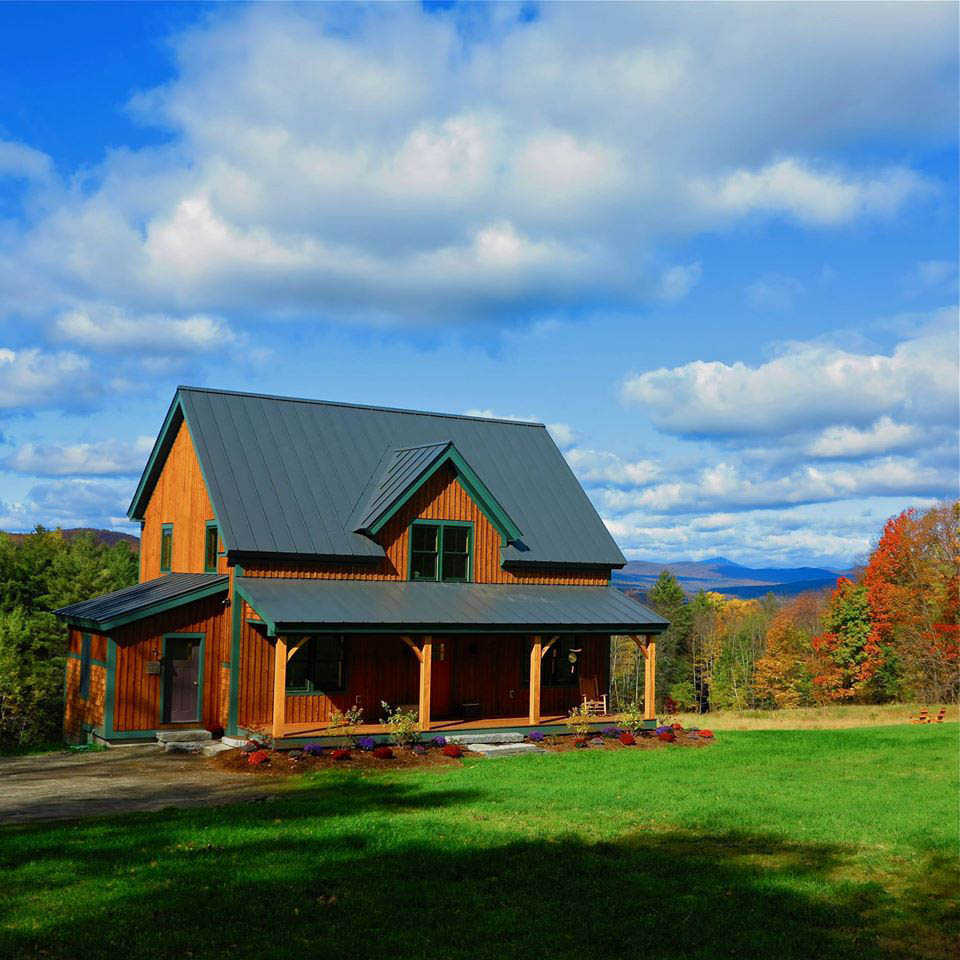
Exterior Porch Bent
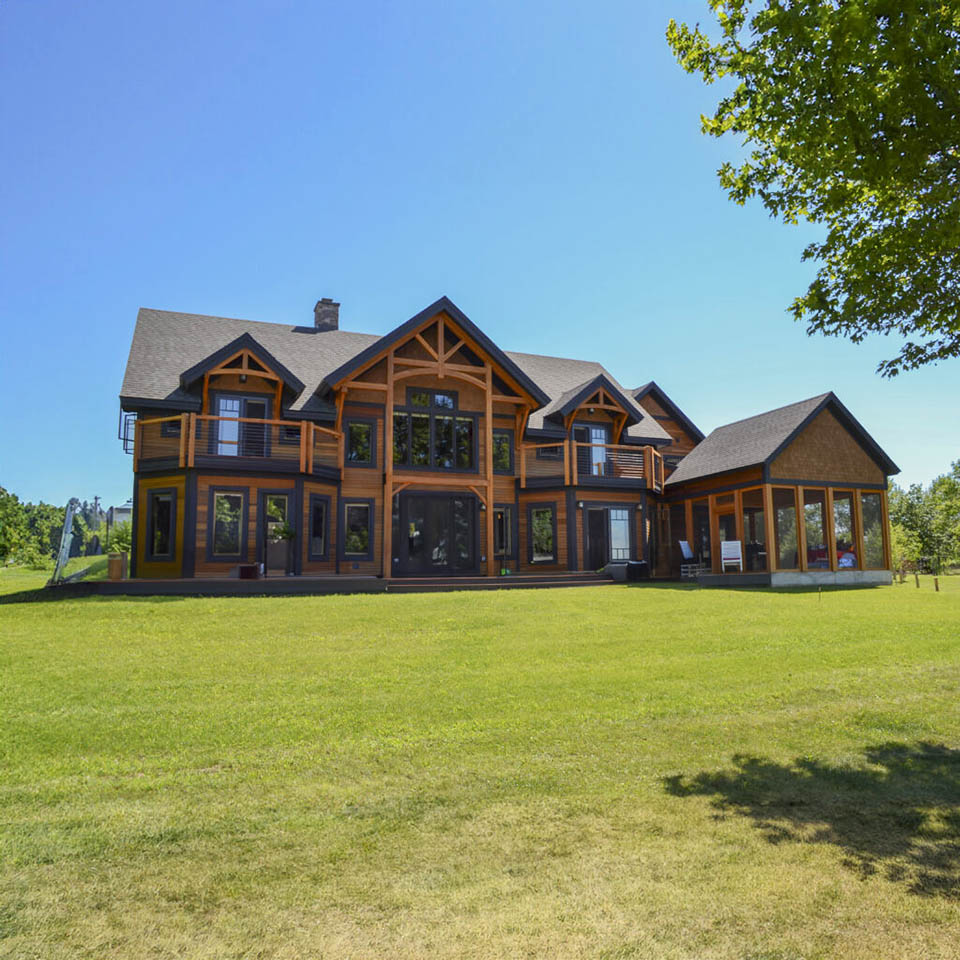
Exposed Trusses and Beams
1. Estimation
2. Design
3. Fabrication
4. Delivery Process
5. Installation
6. Standard Vs. Kit Installs
1. Estimation
Initial Consultation
The first step in working with Vermont Frames is to schedule a consultation with one of our team members to get a sense of the scope and essence of your project. This initial consultation allows us to gather enough information to provide an estimate, which, in a feedback loop, can inform your decisions on what elements to include or exclude as you work with an architect.
Estimates
The estimate process begins with a review of a set of architectural plans. Ideally, those architectural plans will have been drawn with a timber frame and post locations in mind. If you don’t have plans yet, we will work to connect you with an architect who can develop them with you.
If you already have a set of plans meant for a conventionally framed home, we can work with your Architect to adjust them to effectively integrate our Timber Frame Design.
Very often, our clients are working with an Architect to develop a plan in parallel, as they seek our quote. This is ideal, as it gives us an opportunity to work with the architect before the plan is finalized, to take maximal advantage of the strengths of timber framing such as large, open-concept floor plans, cathedral ceilings, and exposed trusses – all in pursuit of your vision for your project. Once the estimate is agreed upon, we formalize the engagement with a contract that outlines the specific scope of the project and request a design fee to move forward into the Design Phase.
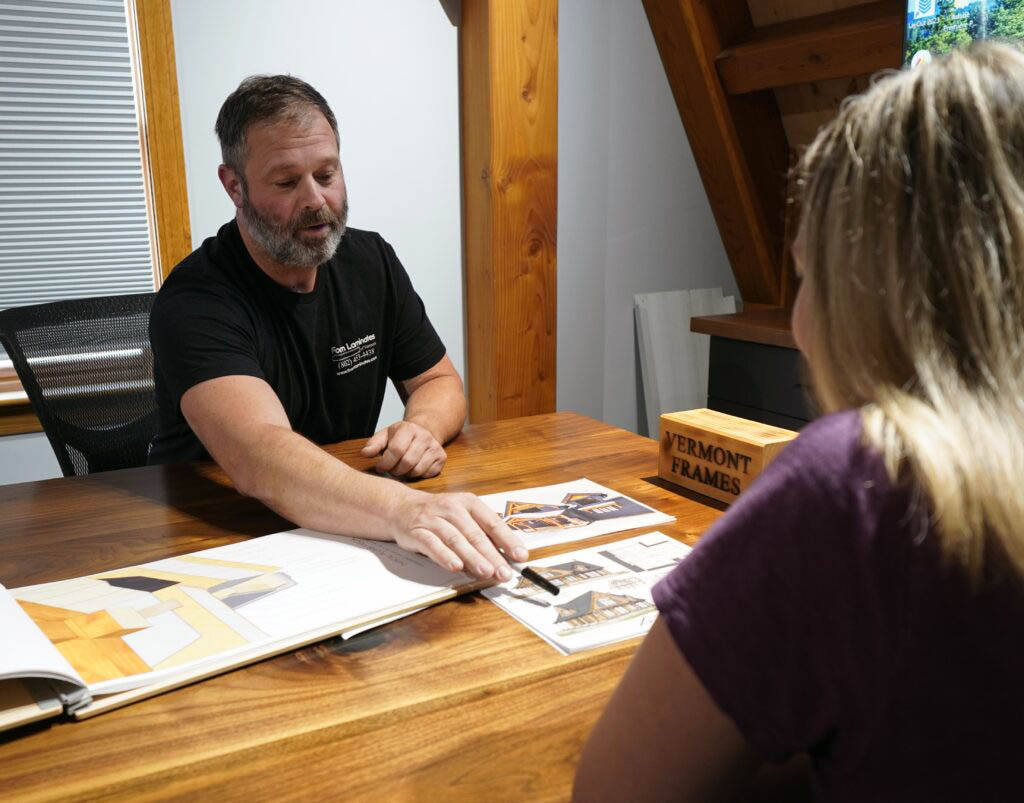
An initial consultation
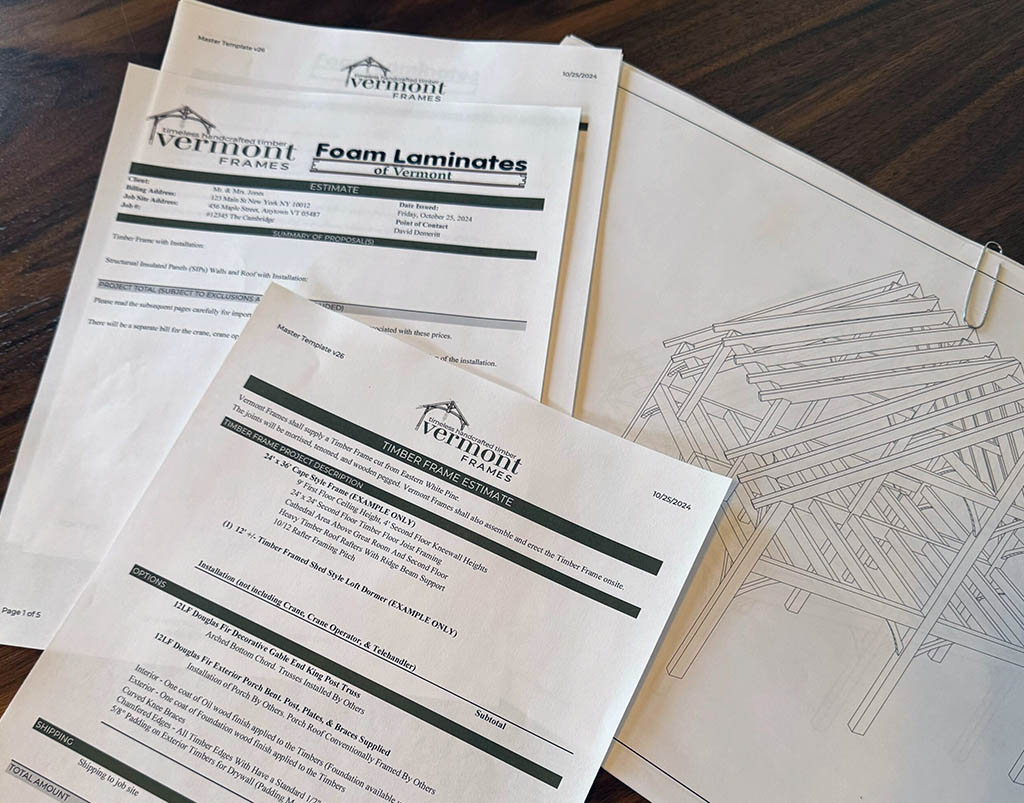
Estimates and architectural plans
2. Design
Design Phase
Whether you purchase a stock architectural plan from one of the design partners on our website or have an architect on your team with a fully customized design, reach out to us early in the process. We’ll work collaboratively to ensure your design is buildable as a timber frame. Timber framing as a building method truly rewards forethought and detailed planning. Unlike conventional building, where changes can be made midstream, timber framing involves long lead time materials to be ordered and is fabricated offsite, here in our shop in Vermont.
Shop Drawings
In the timber frame design phase, we draft our structural timber frame drawings to complement your architectural drawings. These timber frame drawings are used by our team to fabricate and install the timber frame. They show the location and size of all the timbers in the building and are critical to your architectural design team to help develop floor plans, window and door locations, foundation plans, etc. The builder, architectural designer, and client are all included in the process of developing the timber frame design.
Our Timber Frame Design Phase includes a first draft, second draft, and if necessary, a third draft, to make absolutely sure we get all the details of the frame design correct. Depending on the complexity of the project, the design may be sent to a structural engineer for review.
Once the architect, builder, and most importantly the client, are happy with the design, we ask the client to sign the drawings, signifying their acceptance of the design and formally ‘locking’ it. After the design is finalized and agreed upon, the project moves to the fabrication stage. This structured approach ensures that all elements are well-coordinated and that the final build meets both structural and aesthetic expectations. This authorizes us to move forward to the fabrication stage by requesting the Cutting Fee and ordering timbers.
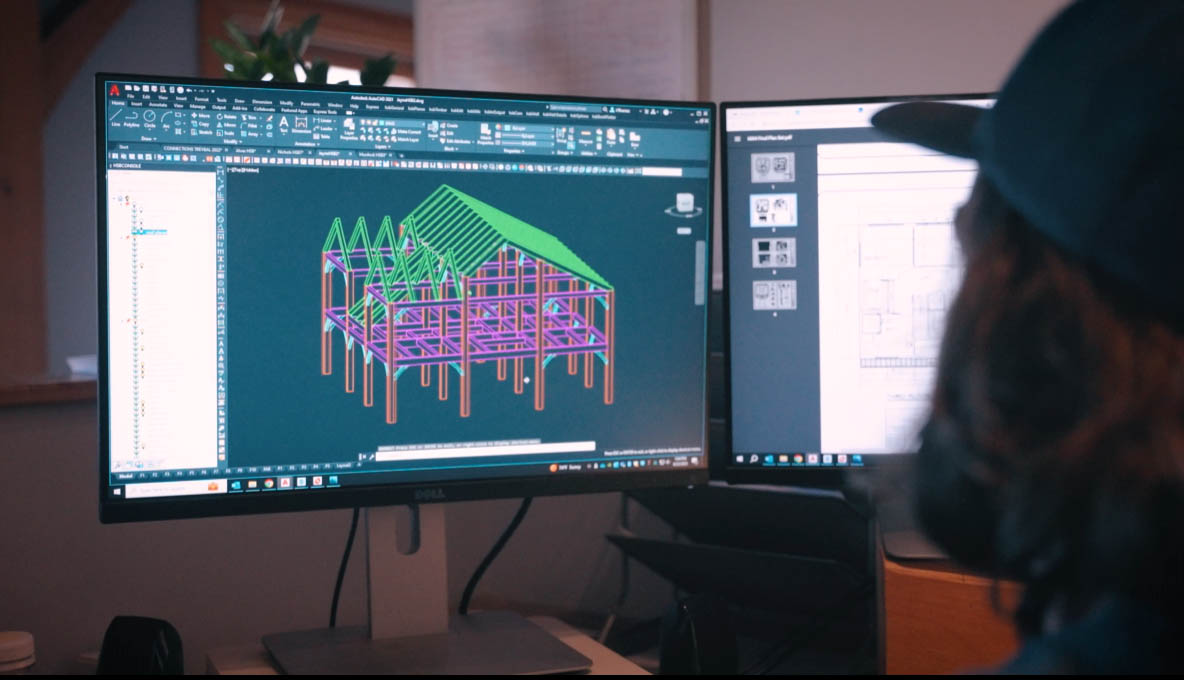
Timber frame in design
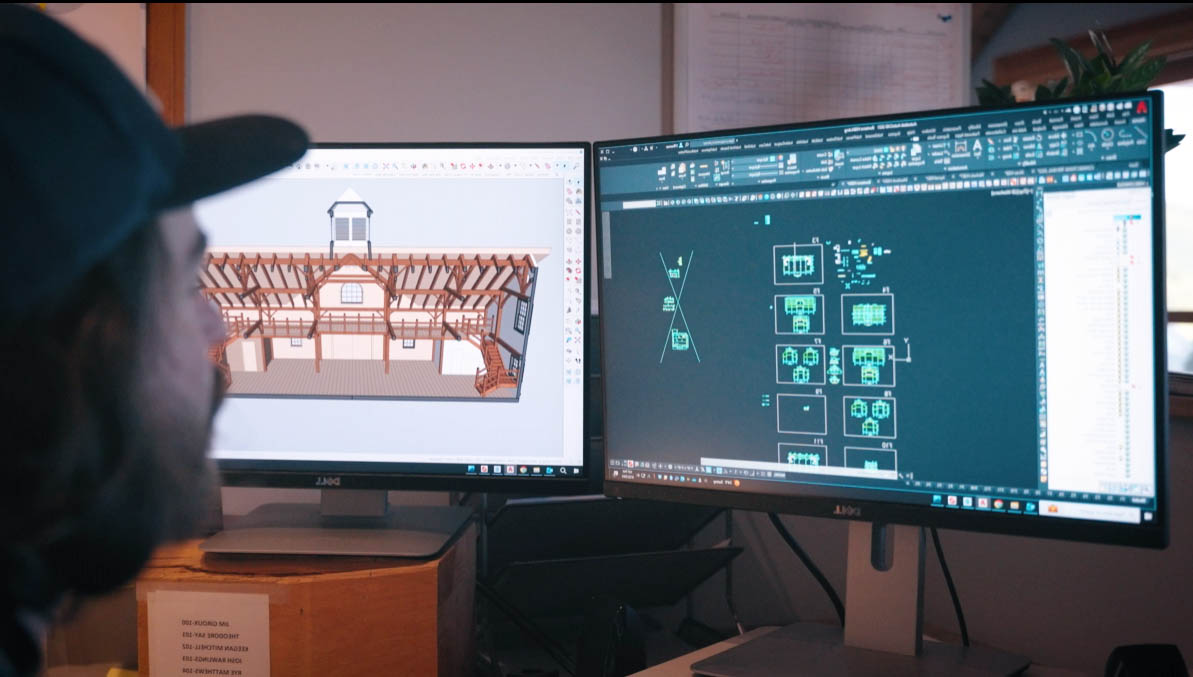
Plan set being put together
3. Fabrication
Fabrication involves taking the approved timber frame shop drawings and detailing each timber according to its specifications. This includes measurements for length, width, thickness, and grade. These specifications are sent to the mill, which returns the squared and planed timbers, or in industry lingo, “Mill Rule” timbers within four to eight weeks. These timbers are then brought into the Vermont Frames shop where the traditional mortise and tenon joinery is hand drawn and then hand cut into each timber. The timbers are re-planed, sanded, and finished with oil or foundation. They are carefully marked and labeled according to the project’s requirements. This stage ensures that every timber piece is accurately cut, protected from weather and UV light, and ready for assembly on site.
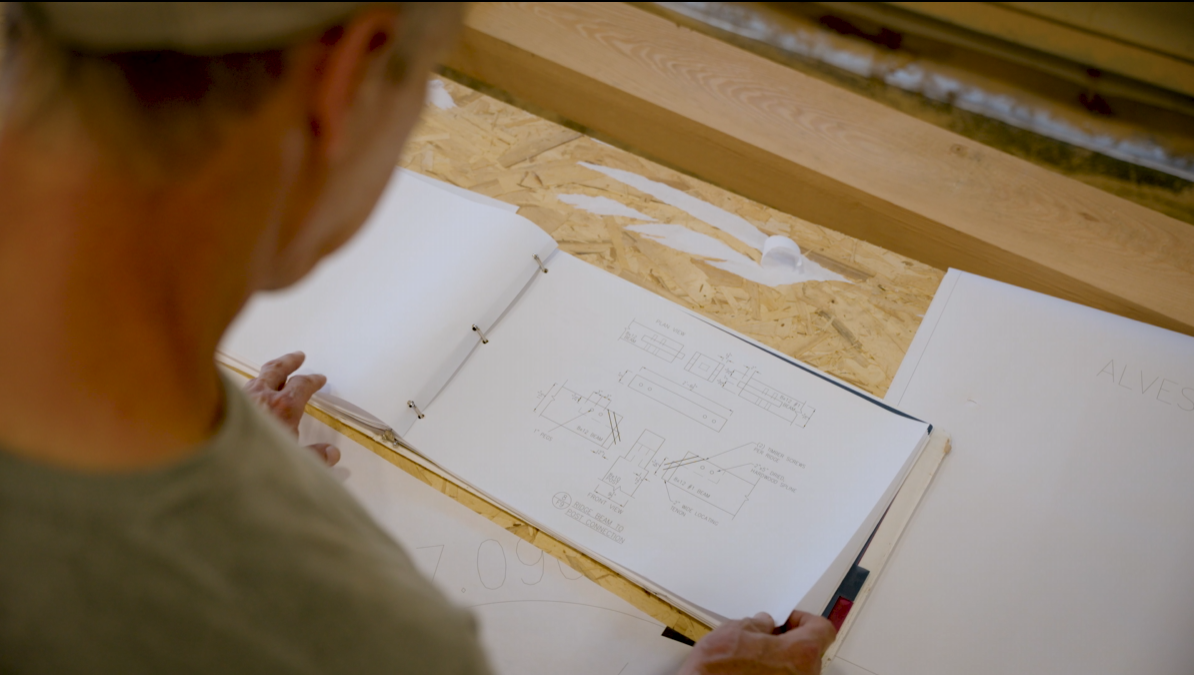
Foreman Reviewing Shop Drawings
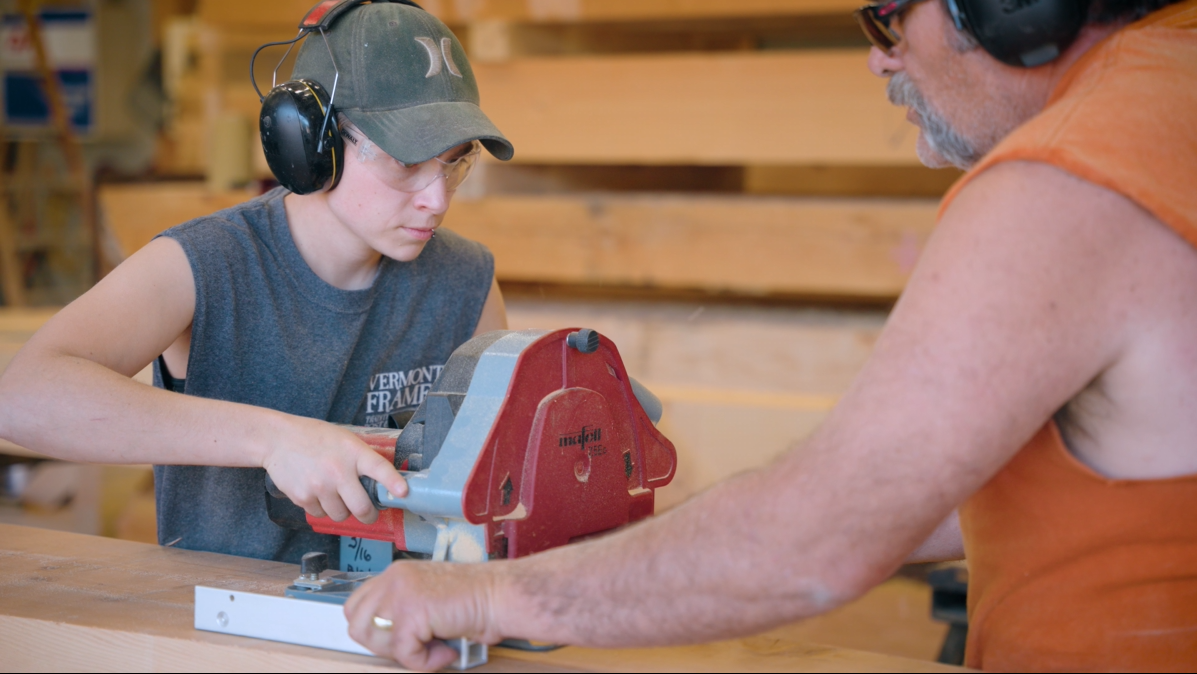
Shop Workers Using Bandsaw to Shape a Timber
4. Delivery Process
The delivery process is meticulously planned to ensure efficiency on site. Timbers and SIPs are bundled, stacked, and labeled in the order they will be assembled. This organization allows for a smooth assembly process once the timbers arrive at the site.
We depend on our clients for one of the most important steps of the delivery process: getting the site prepared and ready for our arrival. This includes ensuring we have access to the site and enough space on the site for our trucks loaded with full-length packages of timbers and panels to drive in and maneuver into the position. A well prepared site will be leveled, graded and graveled to facilitate the offloading of materials and movement of heavy equipment.
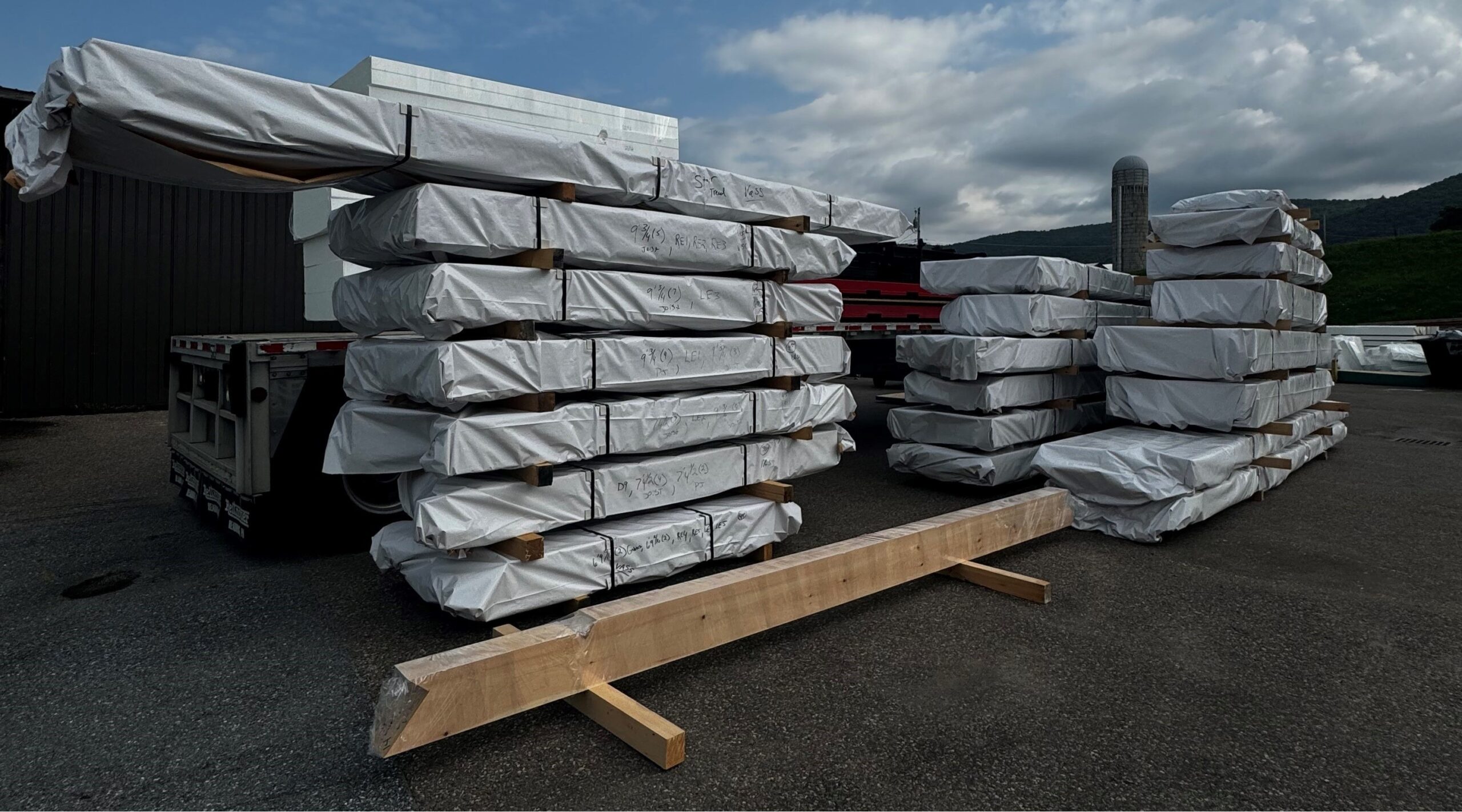
Timber frame packaged for delivery.
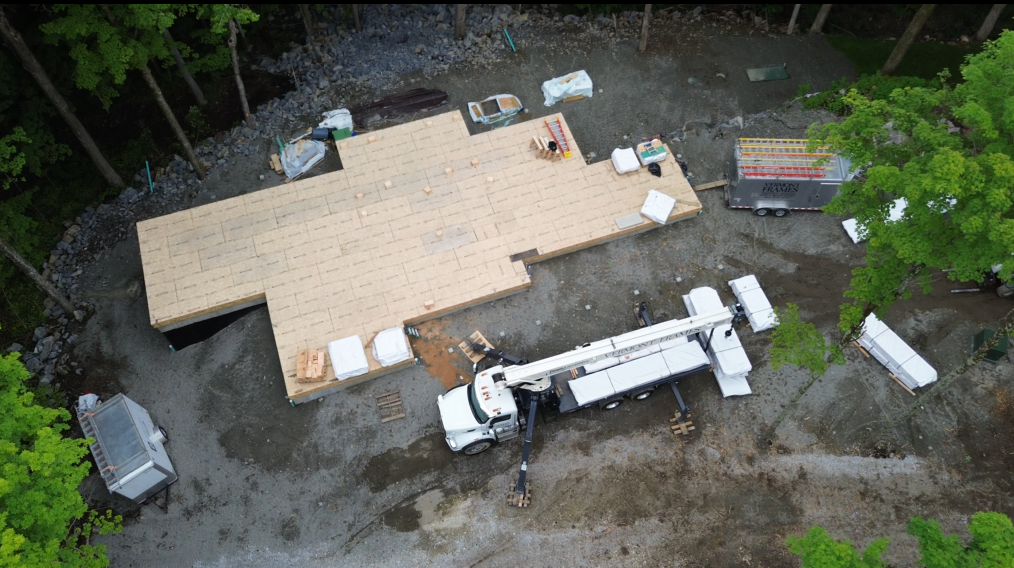
Example of well prepared job site.
5. Installation
This is where it gets real, really fast. Once our Foreman confirms with your builder that the foundation and deck are laid out according to plan, our dedicated installation crew and your timber frame/ structural insulated panels package show up – then the magic begins!
In one to two weeks, we’ll erect the timber frame using our own crane and then enclose it with our structural insulated panels. Bring your lawn chairs and enjoy the show—no kidding, people often show up with their friends to watch us work. Because everything was fabricated in our facility, it goes together precisely and cleanly, with almost no waste or mess on site. By the time we pull off your job site, you’ll have a fully enclosed structure, ready for your builder to install windows, doors, and take your new home across the finish line.
PLEASE NOTE: It’s important that job site preparedness is critical, as a messy or hard-to-access job site can dramatically slow down an installation and lead to costly delays.
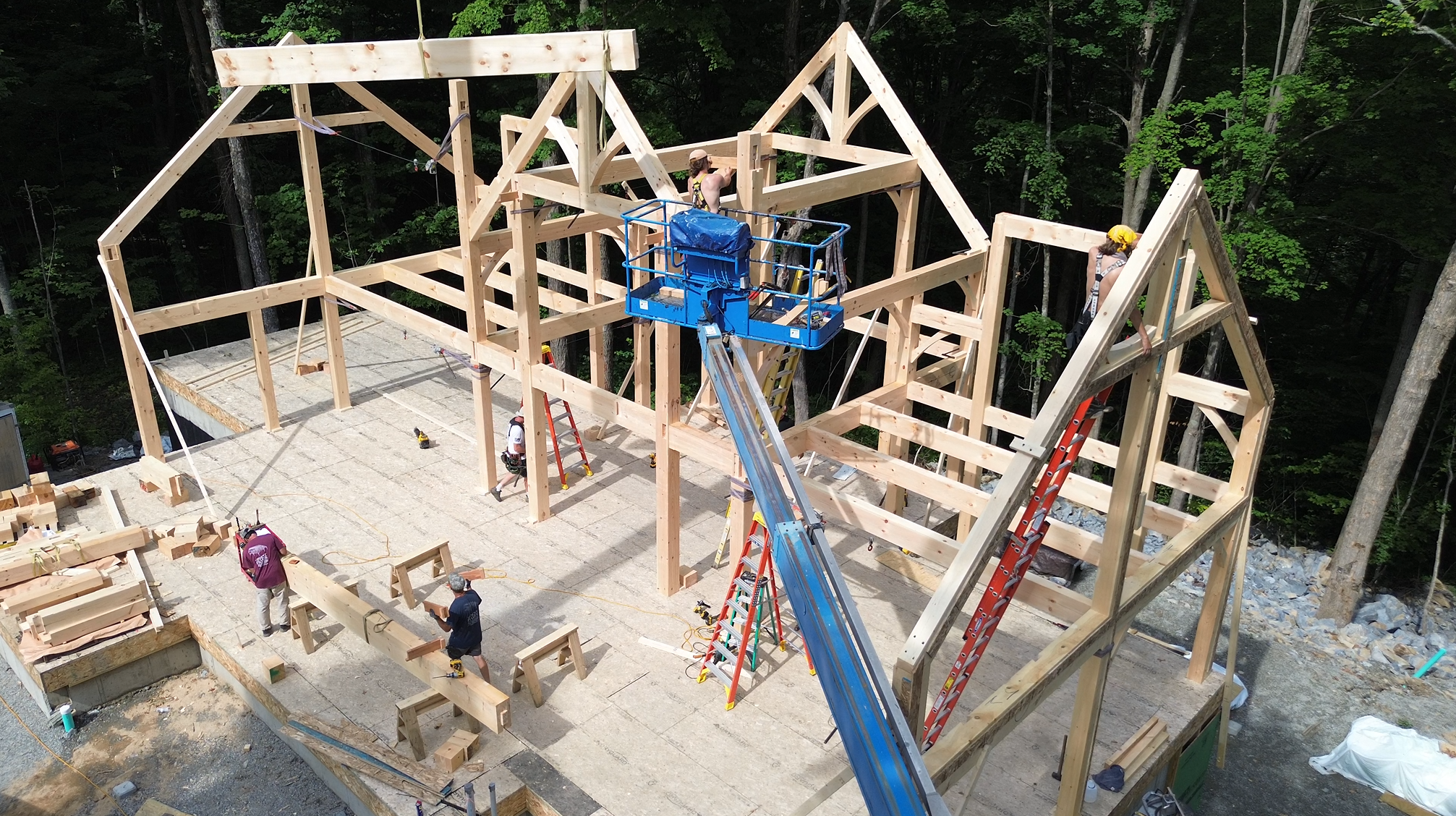
Day 3: installation of a timber frame.
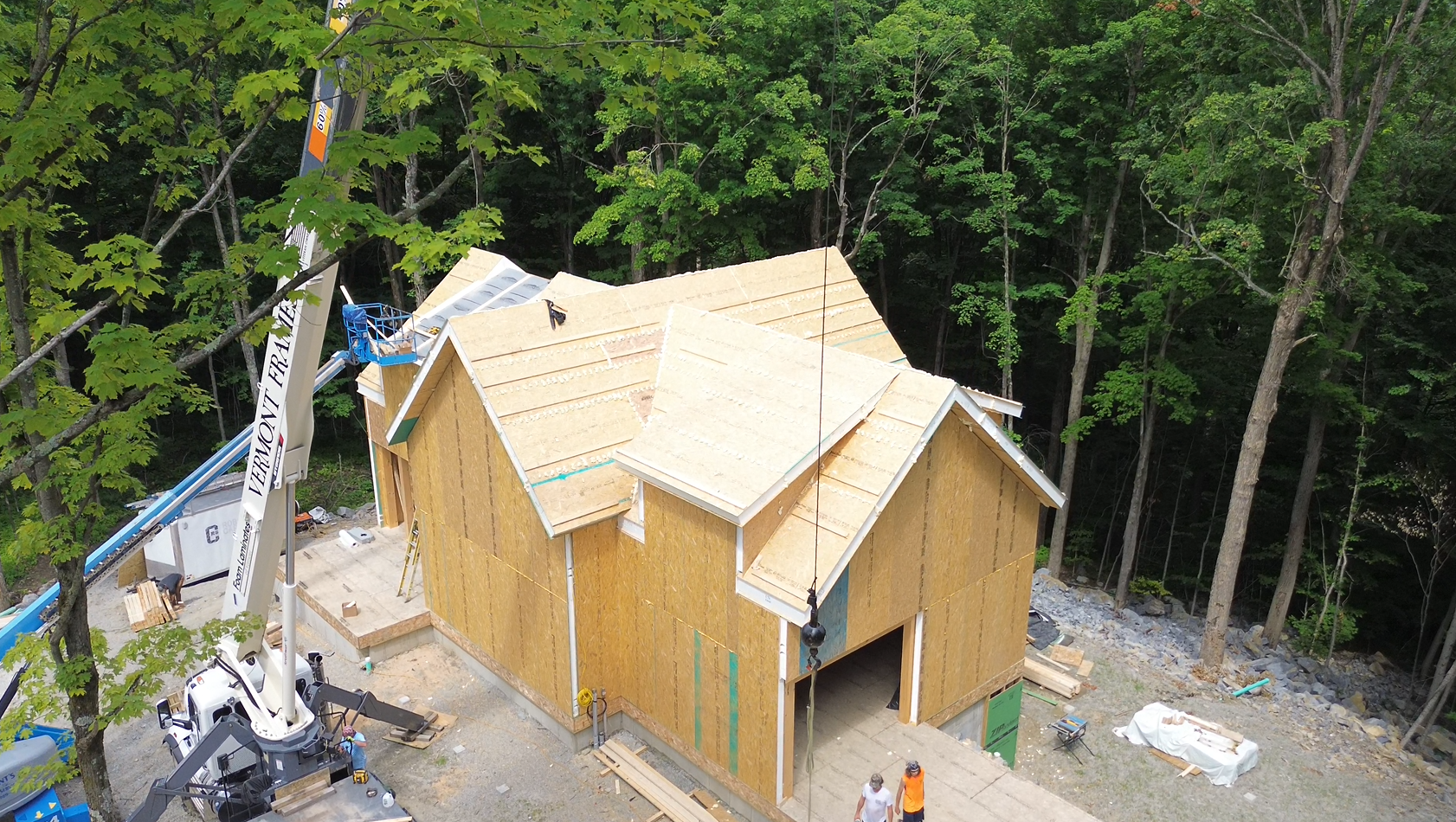
Day 10: Fully installed timber frame w/SIPs
6. Standard Vs. Kit Installs
Standard installations involve the full scope of designing, fabricating, and installing the timber frame and SIPs. In contrast, kit installations include all these steps but with a supervisor sent to oversee an installation performed by a third-party contractor.
The choice between standard and kit installations depends on logistics and cost considerations. Having a supervisor for kit installations is highly recommended as they bring specific tools and expertise necessary for proper assembly and greatly speed up the process. It is essential for clients to understand what is included and excluded in these installations to avoid any confusion.
The seamless coordination between our design, fabrication, and installation teams guarantees a swift and efficient process. The ultimate satisfaction of our clients is our greatest reward, knowing our timber frames will stand as symbols of craftsmanship and quality for generations.
Sign up to receive a copy of The Timber Frame Kit Handbook!
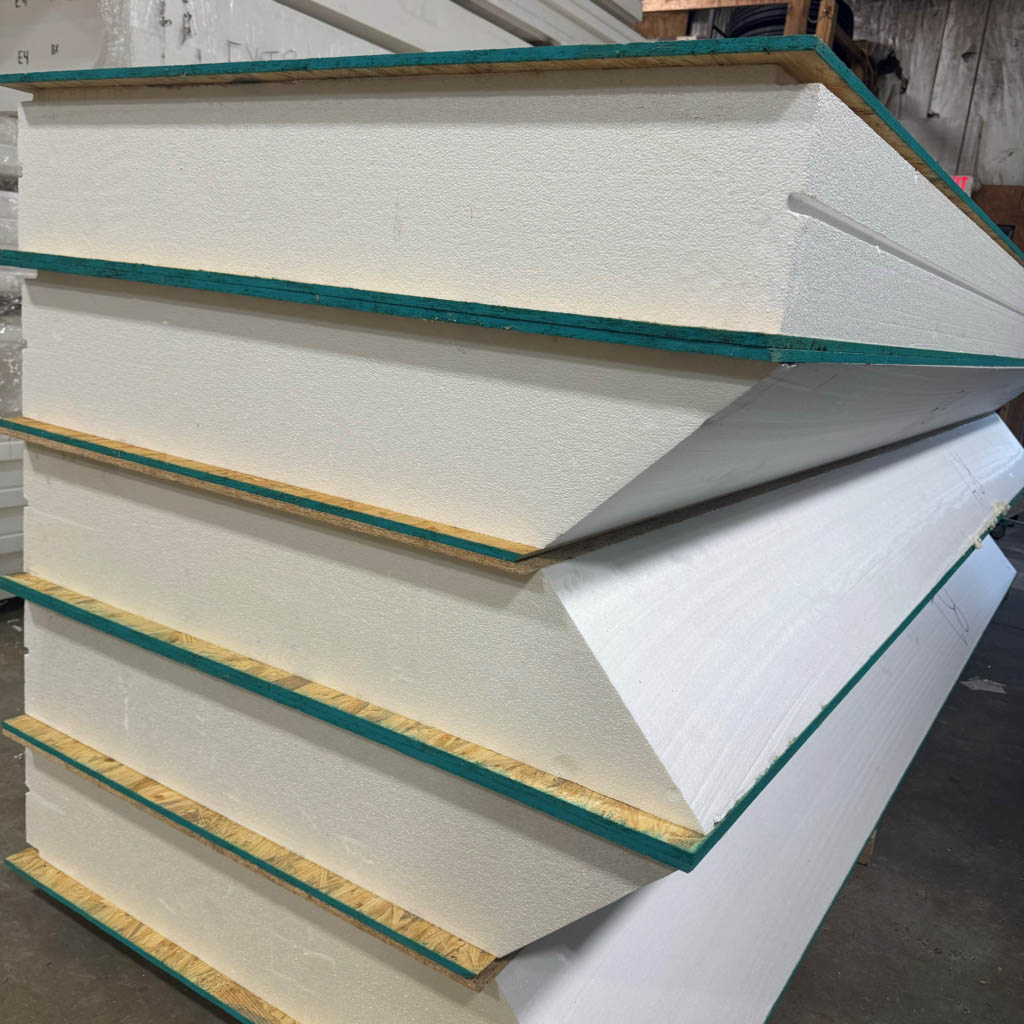
Expanded Polystyrene (EPS) Insulation
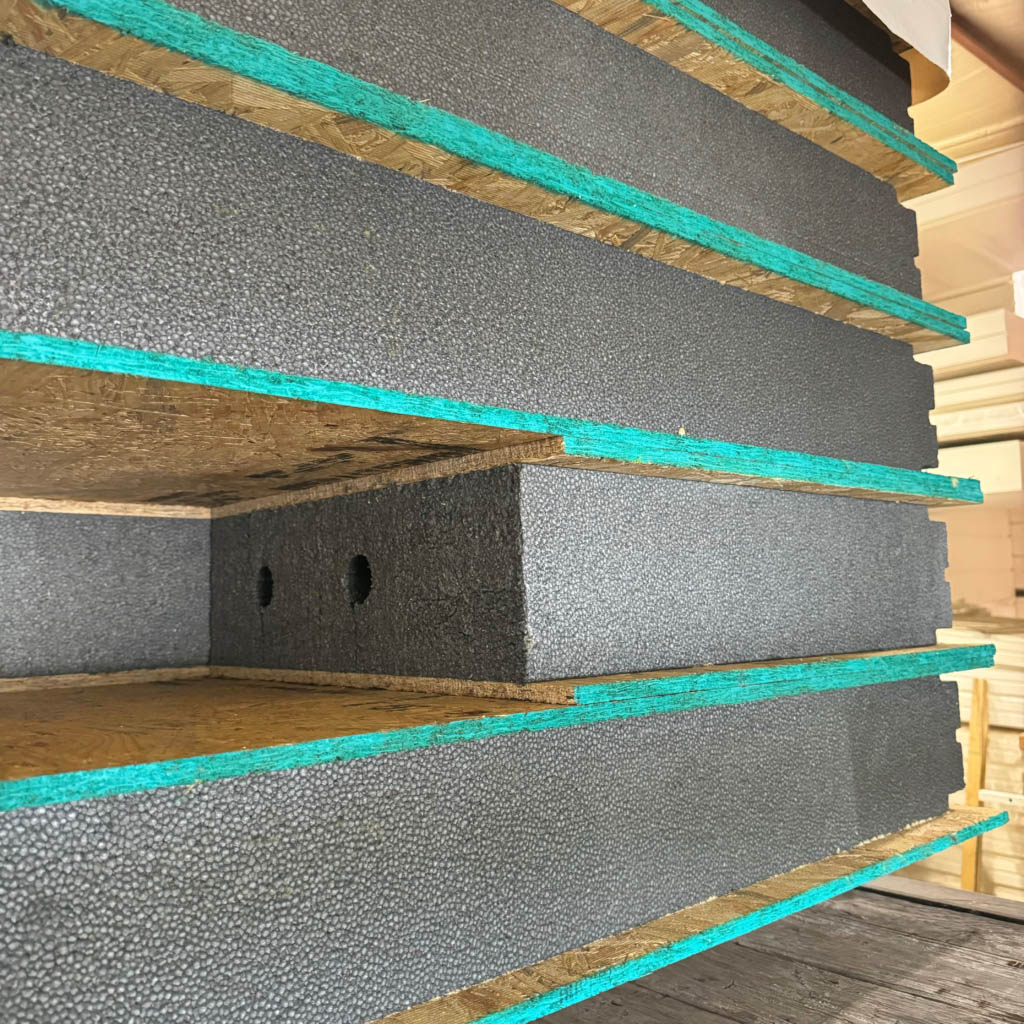
Graphite Polystyrene (GPS) Insulation

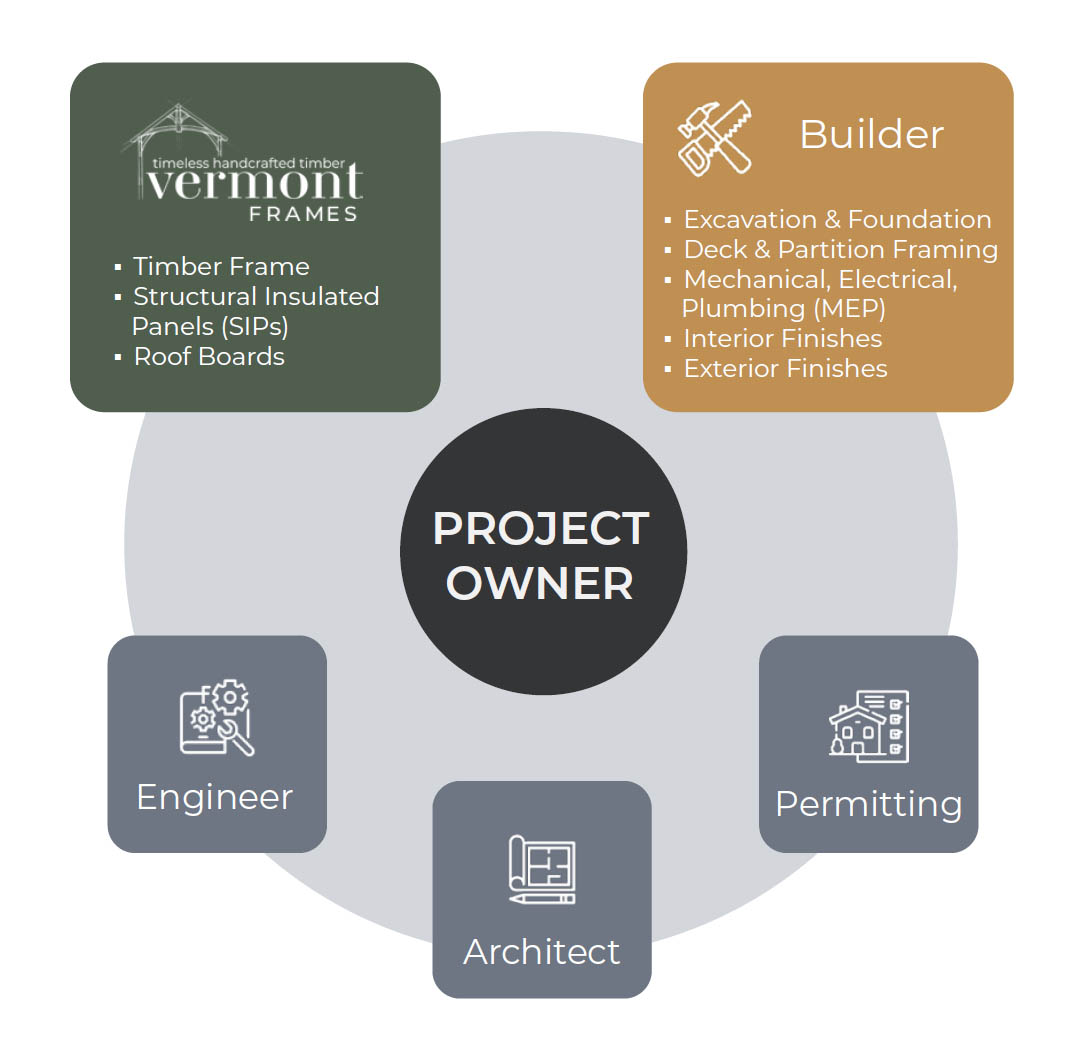
Build Team
The key ingredients to a successful project.The Build Team has multiple people on it, some wearing more than one hat. The Project Owner is central to the project as they set the vision, goals, and budget for the team. Close and consistent communications between everyone on the team helps the project run smoothly and with as few missed expectations as possible.
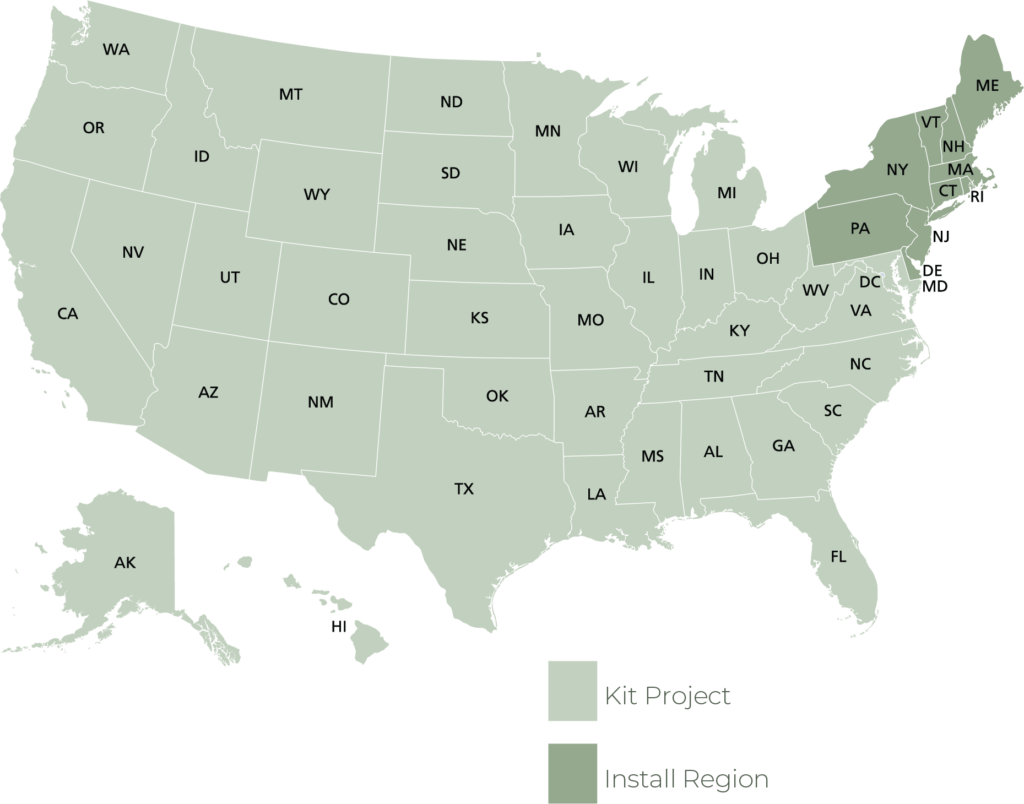
Service Area
Installs in the northeast. Kits everywhere else.We design, fabricate, and install a Timber Frame and SIPs package anywhere from Maine to New Jersey. Our lead times vary by season and the various backlogs of our Design, Fabrication, and Install Teams, but are usually within 3-6 months of contract signing and payment of the Design & Scheduling fee. For projects located beyond New Jersey, or internationally, we offer shipping of your Timbers and SIPs. Additionally, we’ll send a senior timber framer to oversee the installation by a local crew of your choice. This ensures a smooth and high-quality installation, no matter where your site is located.